Author Archives: Jeanie

About Jeanie

I am President of Loiacono Literary Agency, LLC. I have been a literary agency for thirteen years and have over sixty clients and have sold over 200 books to date.

Loiacono Literary Agency takes on Ginny Fite’s second Sam Lagarde mystery, No Good Deed Left Undone.

Loiacono Literary Agency takes on Ginny Fite’s second Sam Lagarde mystery, No Good Deed Left Undone.

FiteGDSC00158R

When Grant Wodehouse went to the barn that fine morning, he had no idea what good, bad or ugly would take place—saddle a couple of horses, a little S&M with his neighbor and a pitchfork through his chest, pinning him to the wall, is what.

Who would not want him dead? Having bedded every female he’d ever laid eyes on, swindled anyone he had ever had business dealings with and ignored and ostracized his children, one person said it was time to meet his maker…but who?

The second in the Sam Lagarde Mystery Series leads us on another blood trail with twists and turns never anticipated. The first, Cromwell’s Folly, is due for release Fall 2015, published by Black Opal Books www.blackopalbooks.com

Ginny Fite is an award-winning journalist who has covered crime, politics, government, healthcare, art and all things human. She has been a spokesperson for a governor, member of Congress, a few colleges and universities, and a robotics R&D company. She has degrees from Rutgers University and Johns Hopkins University and studied at the School for Women Healers and the Maryland Poetry Therapy Institute. She is the author of I Should Be Dead by Now, a collection of humorous lamentations about aging, three books of poetry, The Last Thousand Years, The Pearl Fisher, Throwing Caution, and a short story collection, What Goes Around.  Cromwell’s Folly is her first novel. She is has two other manuscripts ready for acquisition and is currently writing another Sam Lagarde mystery. She resides in Harpers Ferry, West Virginia. www.ginnyfite.com  www.loiaconoliteraryagency.com


A new 10 out of 10 review for Blue Sullivan’s Your Ex-boyfriend Will Hate This on the Chicklit Club

A new 10 out of 10 review for Blue Sullivan’s Your Ex-boyfriend Will Hate This on the Chicklit Club blog, which begins with the words “There are a lot of relationship self-help books out there but none I’ve read compare to this.”

Ex boyfriend cover

http://www.chicklitclub.com/yourexboyfriendwillhatethis.html

Billboard-bg

There are a lot of relationship self-help books out there but none I’ve read compare to this title by debut author Blue Sullivan. It starts out with a hilarious story about his brother and a crazy ex-girlfriend. He details his close girlfriends’ stories of love and loss, and how a woman often has issues loving herself as she is. I have read countless dating and relationship books over my lifetime and this book is the best by far. Blue Sullivan gives you the truth on relationships and their flaws. He eloquently advises what you need to change about your relationship skills, but more importantly how to change how you view yourself – and understand who you are and what you want. Love begins with you and he shows how by viewing yourself in a place of love, that it will transform the way you choose your partners. A lot of self-help books tell you what not to do in a relationship and what to supposedly do – but their tips are often confusing or plain crazy. The advice in this book is straightforward and to the point. If you want a no-nonsense relationship book, then this is for you. (CG)
4 Reasons Why ‘What Men Think’ Really Isn’t That Important

logo

http://www.yourtango.com/experts/blue-sullivan/4-reasons-what-men-really-think-isnt-really-important


A House of Short Stories by Dr. John House THE STRAY

A House of Short Stories by Dr. John House

THE STRAY

images

A precocious six-year-old, Zach Anderson, sat warm and cozy in the back seat of his father’s recently purchased pre-owned Hummer H1. He paid little attention to the verbal warfare coming from the front seat. Engrossed in a video game, and pacified by the furry dog at his side, he ignored the all-too-familiar harangue between his parents, even though the dog was the topic of conversation.

Richard Anderson was hot, and not from the outside temperature. The heavy snow blowing sideways in the twenty-eight degree air was to his liking. The cause of his sudden flushing sat next to him in the front seat of the vehicle. “Look at it from my perspective. I finally get a full weekend off, a chance to try out my new Hummer on the back roads, and you insist we travel to Dillon in a snow storm to visit your parents. If your demand wasn’t enough, you insisted on picking up that wet, stinking mutt.”

“What’s the matter? Afraid you’ll lose the new car smell? Jeanie Anderson stared darts at her husband with her rebuff. “I got news for you, hubby. The new car smell came from a can and if you visit the dealer after this trip, he’ll provide one for you. And furthermore the ‘mutt’ as you call him, is a Norwegian Elkhound, a very expensive breed. He’s obviously someone’s pet and got lost. We’ll leave him with my parents until we can locate his owner.”

Ignoring his wife’s rant, Richard flipped on the radio and tuned to the weather channel that provided up-to-date information on the status of Interstate 70, the highway they traveled west out of Denver. They were near Eisenhower Tunnel, a dual-bore, four-lane vehicular tunnel continuing I-70 under the Continental Divide in the Rocky Mountains. The announcement over the radio reaffirmed Richard’s growing suspicion of the slow traffic. The Tunnel was temporarily closed. He was familiar with those words; ‘temporary’ meant anywhere from one hour to twelve hours. He refused to sit in the car with a stinking dog and a bitching wife for any length of time.

“We’re getting off at the next exit,” he announced to all.

“Are we going home? I’ll need to call Mom and tell her.”

“No. Your mother will accuse me of using bad weather to avoid the trip,” Richard retorted. “I’ll get on U.S. Highway 6 and travel across Loveland Pass around the tunnel.”

“Are you crazy?” Jeanie leaned over the seat divide and shouted in Richard’s ear. “If the snow is too heavy for traffic to safely enter the tunnel, why would you even consider driving over Loveland Pass?”

Richard patted the steering wheel. “This baby will make it. It was built for this weather and terrain. Wide track, four-wheel drive, sixteen inches of ground clearance. See this button? CTIS. Central Tire Inflation System. This magic button lets me increase or decrease the tire air pressure from inside the vehicle. If the terrain gets rough, I’ll lower the tire pressure to handle it.”

Folding her arms across her chest, Jeanie flopped back against her seat. “You are thinking with your overabundance of testosterone. You are placing your family at risk for a joy ride.”

Zach removed a hand from the video game, gently rubbing the soft fur of the dog’s head buried in his lap. When the dog whined, Zach placed the game on the seat, grabbed the animal’s ears and playfully rocked his head from side to side. “Easy, boy. We’re going up a mountain.” His words were meant to soothe himself as well as the dog. He had remained quiet since the turnoff onto Highway 6, but when the wheels spun and the vehicle slipped sideways, he wasn’t so sure his father could handle the treacherous road. He had crossed the pass one summer with his grandfather, and remembered the steep drop-offs away from the mountain. Guard rails were almost nonexistent and then only on the worse hair-pin curves. He pushed the dog’s head out of his lap and leaned forward in his seat located behind the driver. The snow blanketed the windshield making the wipers useless and the glare of the headlights reflecting off the falling snow made visibility worse. “Shouldn’t we go back?” he asked.

Richard attempted to show confidence though the nervousness in his voice betrayed him. “No place to turn around, sport. I know this road well. We are near the summit. Once we top out we’ll get protection from the wind-driven snow and we’ll inch our way down the other side.” He cast a quick glance at his wife who remained rigid in her seat, her eyes locked on some invisible object outside the Hummer.

The right rear wheel suddenly lost traction and spun in place causing the Hummer to slide toward the edge of the road and the precipitous drop. Jeanie gasped, and then clamped her hand over her mouth to avoid alarming Zach.

Richard wrestled the steering wheel to the left and moments later the left front tire caught firmly and pulled the slowly drifting vehicle back toward the sloping incline to their left.

Jeanie could sit quietly no longer. “For God’s sake, Richard. Please stop and rest for a few minutes. I can see the strain in your face.”

Richard’s shoulders slumped, giving in to his whining wife. She had no sense of adventure. A city girl. Never exposed to danger in her life. I can’t let Zach grow up like her. He applied pressure to the brake pedal and the already slow moving vehicle came to a complete stop. “We can’t sit here long. The snow will pile up and make forward progress more difficult. A few minutes of rest won’t hurt. Once we get to lower elevation the snow won’t be this heavy and we can make better time. Maybe you’d better call your mother and tell her we’ll be late.” He slumped down in his seat, resting his head against the support. He heard Jeanie mumble, but the words were lost in his brief respite.

“Did you hear me? There is no signal.”

Richard pushed upright. “Did you charge your phone before we left?”

Jeanie spat her answer back at him. “I have it plugged into the adapter. There’s plenty of power. Just no signal.”

Richard shifted his body forward, dug into his pocket and retrieved his smart phone. With a click it came alive. No towers. “Damn. The mountain and this heavy snow is blocking the signal. We better get started. Keep an eye on your phone. If towers pop up on the screen, yell out and I’ll stop.” He had left the engine idling during the stop to keep the interior of the Hummer at a comfortable temperature. He raced the engine a little, shifting the gear from neutral to forward. The vehicle lurched forward for several inches before all four tires spun in place. He pressed harder on the accelerator and the 6.6 L turbo Diesel V8 engine roared, the 300 horsepower applying the maximum of 520 lb-ft of torque to the transmission. The tires spun faster, digging through the snow to the ice layer below. All four tires failed to make purchase.

“I knew we shouldn’t have stopped.” He slammed the gear into reverse and gradually increased pressure to the pedal. The tires grabbed for an instant before spinning again. Rapidly shifting the gear from forward to reverse, he managed to rock the Hummer back and forth in the same tracks. With each gear change he silently pleaded for the tires to grab a solid surface. The tires sunk deeper into the trench with each maneuver until the undercarriage of the vehicle came into contact with the snow buildup. Previous silent prayerful pleadings became a stream of curses and he pressed and held the accelerator to the floor, slamming the gear shift back and forth. The engine screamed in protest and steam poured out from under the hood.

Jeanie grabbed Richard’s arm. “Stop it, stop it. You’ll blow the engine and we’ll freeze to death.”

Richard was beyond hearing, or caring about the engine. He continued his maniacal frantic maneuvers until the left rear tire suddenly made purchase. With the gear in the forward position, the vehicle leapt out of its own brief grave and shot forward. Richard shouted in joy, his elation cut short when the front of the vehicle veered sharply to the right. At the same moment, the right front tire dug into the ice on the side of the road causing the front end to dip and then slip downward over the edge. He stomped on the brake pedal, locking the wheels even as his brain registered the futility of the action. He yanked the gear shift back into reverse, shoving his foot on the accelerator with all his might, praying the tires would grab and stop the slide. The motor howled and the tires spun uselessly, failing to slow the vehicle’s descent over the snow-covered frozen terrain. He turned toward Jeanie, his eyes taking in the panic on her face as she searched the back seat for Zach who had fallen to the floor during the furious back and forward motions.

Locking his hands on the steering wheel, he pressed his feet against both the brake and the accelerator. Neither action slowed the rapid descent of the Hummer down the side of the mountain. The large tires and the undercarriage careened off covered boulders, bouncing the box-like vehicle from side to side even as the downward plunge increased in speed.

“God save us,” pleaded Richard.

Jeanie screamed. “Zach, get on the floor and cover your head.”

The front tires struck a wide, partially buried boulder sending the Hummer airborne for several seconds before the front windshield exploded in a shower of glass and the grill impacted with a massive hardwood tree. The front seat airbags deployed instantly, seconds after the frozen protruding limbs of the tree slammed through the windshield, impaling the occupants of the front seat. The force of the impact killed the engine and soon the only sound was a momentary pinging noise from the rapidly cooling motor.

Within minutes the wind driven snow covered the debris, restoring balance with the surrounding landscape.

Zach awoke to a wet cloth bathing his face. He quickly realized it was the dog’s warm, rough tongue. He wrapped his left arm around the dog’s neck, answering the whimpers from the animal with soothing words. “It’s okay, boy.” Why is it so dark and quiet? Where are my parents? He lay still with the animal in his embrace. Slowly the memory of the earlier event returned. “Mom? Dad?” He pushed the dog to the side and attempted to get up from the floor. He screamed when the motion produced lightning bolts of pain shooting up his right arm to his shoulder. His arm was pinned beneath the front seat. “Mom, help me. I can’t move my arm.” His plea was met with silence. Why would they leave me in the car? He collapsed on his back, aware of the cold wind blowing through the shattered windshield. “Dad, I hurt my arm. Why won’t you help me?” His lips trembled, followed by tears streaming down his face. He felt the dog lick his face, and then climb on top, whimpering in response to the tears.

***

Michael Harris hung up the phone and turned to his wife. “No one answers at home. I’ve tried their cell phones. No response.”

Ann stood beside her husband with her hands folded beneath her chin in prayer. “Please call the Colorado State Patrol. It’s almost dark. They should have been here hours ago. It’s not like Jeanie. She would have called if they were delayed by the weather.”

Michael nodded his agreement. Eight hours had passed since his daughter first called to let them know she, Richard and Zach were leaving from Denver. Even in bad weather, the trip shouldn’t have taken more than four hours and, in the Hummer, the icy roads should still be passable. “I’ll call the Patrol office. Maybe the tunnel on Interstate 70 is still closed. The kids may be in a restaurant somewhere waiting on the roads to be scraped and salted.”

“They would have called,” Ann murmured under her breath.

***

Zach tried desperately to be brave. His Paw Paw would be proud of him. He was so cold and his injured arm wouldn’t allow him to rest. He twisted in place until he was lying on his right side with his knees pulled up to his chest. “Someone please help me.”

He heard a whisper, like the wind blowing through the shattered window. “I’m with you.”

Zach turned his face toward the sound and quickly covered his eyes shielding them from a bright light above him. A weight compressed him against the floor, the discomfort made tolerable by the blessed warmth seeping into his frigid body.

***

At dawn, Michael Harris sat across from the commander at the district State Patrol office. Almost twenty-four hours had passed since he last heard from Jeanie. When he arrived earlier at the Command Post, he half expected the troopers to advise him to go home and wait for his kids to call. That didn’t happen. The tunnel had been re-opened only five hours after the initial closure and no one remembered a 2006 silver-colored Hummer passing through the roadblock. Anyone in line should have long ago reached their destination.

A massive snow blanket buried the exit from the interstate to Highway 6 that briefly ran parallel to the interstate before climbing northwest. The road, when clear, was used by trucks hauling hazardous material, and during the spring and summer was used by tourists who wanted to enjoy the panoramic views offered by the high mountain pass. Few were fool hearted enough to chance crossing the pass in the winter, especially during blizzard-like conditions.

A Search and Rescue helicopter operated by the Boulder County Sheriff’s Department was soon in the air following Highway 6 by GPS since it was virtually impossible to distinguish the road from surrounding snow banks. The occupants at each window made careful notes of each sharp turn and sudden drop offs. No one expected to find the vehicle parked on the side of the road. If the family had chosen this route around the roadblock, the officers hoped to see a distress signal or message stamped out in the snow.

“Caught a flash of something, sir!” Sergeant Williams shouted. “At your one o’clock position.”

“I see it. Looks like a piece of chrome. Maybe a section of glass.” He spoke over the internal communication to the pilot. “Hold a position around this region while I radio the ground crew to check it out.”

Thirty minutes later a Snowcat appeared near the site and Sergeant Williams dropped red flags at the end of long wooden rods onto the location in question. Three rescuers, using ropes tied to the Snowcat, rappelled down the slope. Using gas-powered blowers, they cleared away the heavy accumulation of snow and identified the Hummer. Using equipment from their packs they pried open the frozen doors and discovered the gruesome scene inside. After clearing additional snow, they opened the rear doors.

“I don’t see the boy. There’s a large dog on the floor. Damn, it’s frozen stiff. Hard to move him. Wait! I found the boy. He’s beneath the dog and he’s breathing.”

***

Michael and Ann Harris rushed into the waiting area of the emergency room. The trip by police helicopter had been the longest of their lives.

Lieutenant Steed met them at the information desk. “Your grandson is alive. He’s undergoing treatment for hypothermia and a broken arm. I understand you’ve already been informed about his parents.”

Michael pulled his wife to him in a tight embrace. “Yes. We were devastated by the news. We are so thankful to you and your people for the successful rescue of our ‘Zach’.”

***

Ann remained constantly at Zach’s side and she was holding his hand when his eyes opened. “Mama Ann. We had a bad wreck. I don’t know where Mom and Dad went.”

“We’ll talk about that later. Right now, we’re so glad you are okay.”

“A nice man kept me warm. He stayed with me the whole time.”

Ann turned her head toward Michael. Her face registered her confusion. “Which man was that?”

“The man in the white coat. He lay down on top of me and he never moved.”

Tears welled up in Michael’s eyes. He recalled the rescuers informing him of finding a dog covering Zach. The carcass of the animal had been left in the Hummer. He turned away from the hospital bed.

Ann looked up when her husband started for the door. “Michael. You look upset. Where are you going?”

“To find the hospital chapel to say a prayer for a special animal. Then I’ll find someone to bring him home for a decent burial.”

***

Michael stood up from the chair at Zach’s bedside when he heard a knock at the door. He opened the door and stared at the puzzled face of Lieutenant Steed.

“Mr. Harris. My men went back to the accident site by snowmobile. They searched the Hummer and the area around it. The dog’s body wasn’t there.”


By Dr. John House, author of Trail of Deceit, a story of cold deception… * www.johnhouseauthor.com  Published by Limitless Publishing www.limitlesspublishing.com  * Represented by Jeanie Loiacono *   https://loiaconoliteraryagency.com
 

Rochelle Wisoff-Field racks up outstanding reviews for Please Say Kaddish For Me!

Rochelle Wisoff-Field racks up outstanding reviews for Please Say Kaddish For Me!

pleasesaykaddishforme

By Sarah C P

This novel, set in the Czarist Russia of 1899, was a real eye-opener for me. Before I read it, I knew very little about the appalling treatment of Jews in the Country at that time. Labelled as “Christ Killers”, whole families were brutally murdered or lived in constant terror of thugs storming into theirs homes or workplaces to treat them to violence or finish them off.

Against this backcloth, the author paints a most vivid and detailed picture of daily Jewish life and the importance of family, bound in tradition, ritual observation, and obligation: the concept of extended family ingrained into them in a way that outsiders might misunderstand as exclusivity and use as an excuse for persecution.

The main character in the novel is Hannah, the daughter of a Rabbi. After her family is murdered and her village razed, she is adopted into another family. She’s feisty and sometimes pigheaded, often fighting against the traditional female role expected of her, which includes women not reading and instead tending to household chores, especially the preparation of meals. In this novel, there is so much about cooking and the rituals surrounding mealtimes! On the face of it, this might not sound interesting but the author describes it in such as to makes it fascinating.

Although the story is centered around Jews, it is very much about the human condition: the delicate balance between order and chaos; the push-me-pull-you between love and hatred, and the grey areas in between. Thus, it’s a story that’s worth reading, whatever your religious or non-religious background.

I have one little criticism, or rather suggestion to the author if she plans a second edition of the novel, and that is the construction of a family tree in diagram form at the beginning of the book. The names would all be familiar for a Russian Jew from 1899, but not so for the likes of modern English-speaking readers. I got in a terrible muddle about names and about who was related to who. But don’t let this put you off reading this most worthy and illuminating work, just have a pen to the ready, and jot down who is who on a scrap of paper to keep as your bookmark, then you won’t get lost.

www.rochellewordart.com

Published by W&B Publishers

Represented by Loiacono Literary Agency

An exemplary review for Please Say Kaddish For Me by Rochelle Wisoff-Fields

An exemplary review for Please Say Kaddish For Me by Rochelle Wisoff-Fields

pleasesaykaddishforme

Depicted on the cover:  Havah and Fruma Ya’el

By Sandra

This was a compelling read, from beginning to end and I finished it in two sessions. A thoroughly engrossing tale, with brilliant characterization. I felt as though I knew the characters well, and since I knew that a pogrom would be imminent, I found my anxiety levels increasing the more attached I became to them. Atmospheric, graphic, charming and horrifying. The pace was just right as was the changing and contrasting cycle: horror – forbidden love – bitterness – love – horror – redemption. Characters were dispatched expeditiously with just the right amount of detail and at appropriate intervals – and none of it was signaled up in advance. A vivid portrayal of Jewish family life in extraordinarily difficult times.

www.rochellewordart.com

Published by W&B Publishers

Represented by Loiacono Literary Agency


Jodie Cain Smith will be signing copies of The Woods at Barlow Bend on August 20, 2015, 6-9 p.m.

Jodie Cain Smith will be signing copies of The Woods at Barlow Bend on August 20, 2015, 6-9 p.m. Join her along with other new local authors at Barnes & Noble in Augusta, Georgia for the New Writers Night. Fill your shelf with great reads to take you through the end of summer and into fall!

New Writers Night

August 20, 2015 – 6-9 p.m.

Barnes & Noble Augusta Mall, 3450 Wrightsboro Rd, Augusta, GA 30909 (706) 737-0012

Jodie Cain Smith

http://thequeendom.org

Published by Deer Hawk Publications www.deerhawkpublications.com

Represented by Loiacono Literary Agency www.loiaconoliteraryagency.com

Book-Cover-200x300 Jodie Cain Smith


TOAST REMARKS BY PRESIDENT OBAMA AND PRIME MINISTER HAILEMARIAM DESALEGN OF ETHIOPIA AT STATE DINNER – Col. John Robinson, The Man Called Brown Condor

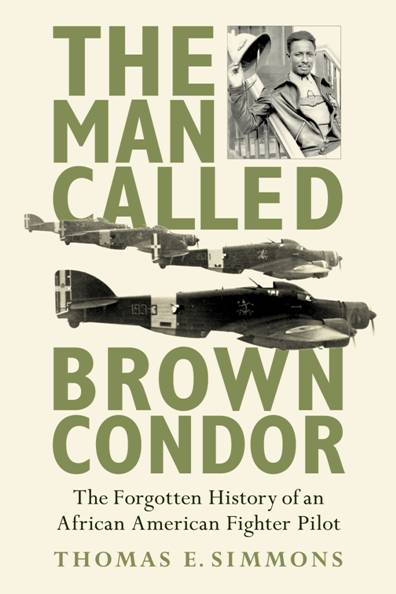
TOAST REMARKS BY PRESIDENT OBAMA AND PRIME MINISTER HAILEMARIAM DESALEGN OF ETHIOPIA AT STATE DINNER – Col. John Robinson, The Man Called Brown Condor by Thomas E. Simmons

The Man Called Brown Condor cover art

National Palace
Addis Ababa, Ethiopia

8:02 P.M. EAT

PRIME MINISTER HAILEMARIAM: Your Excellency, the President of the United States of America, Mr. Barack Obama, distinguished guests, ladies and gentlemen: In the history of the relationship by Ethiopia and the United States of America, this is an exceptional occasion. Never before did we have the opportunity to be able to welcome a sitting President of the United States for an official visit to Ethiopia.

And, Mr. President, we welcome you and all the members of your delegation to Ethiopia with open arms. (Applause.) Your visit is a mark of the long friendship between our two countries and our two peoples — a friendship that I am certain will be further enhanced in the future. It shows the strengths and depths of the diplomatic and cultural relations we enjoy today, and underlines our hopes for the future.

Mr. President, distinguished guests, ladies and gentlemen, our links were formally established at the beginning of the last century when a treaty of commerce was signed during the reign of Emperor Menelik and President Theodore Roosevelt administration in 1903. Since then, and even earlier, the United States provided an inspiration for the advancement of science and technology, and indeed, of democracy and good governance.

Ethiopia, similarly, as the only surviving vessel of freedom and independence in Africa, offered an inspiration to many in America. It was a source of inspiration for a great African American thinker and philosopher, Du Bois, as well as more recently, Dr. Martin Luther King, Jr. And many saw a source of enlightenment in the spirit of Ethiopia. They saw the courageous struggle of Ethiopia as the symbol of the struggle of the whole community of Africans across the world for civil liberty, equality, and freedom.

Our relationship established on the basis of mutual understanding, respect and dignity, and matured in the struggled against fascism. The role of the United States to the struggle can only be described as historic. People all over the country protested against Italy’s invasion of Ethiopia. You raised funds and sent medical supplies. People in New York, Harlem, Oklahoma, Texas, and many other cities paraded in support of Ethiopia. Thousands offered to enlist to fight for us. And even after the war, many more came to Ethiopia to help in our post-war reconstruction.

It is perhaps appropriate to single out one person, as I feel this is an appropriate moment to mention one African American hero who grew up in Mississippi during the early 1920s, and came to Ethiopia in 1935 to help us in our struggle against fascism and colonial aggression. Colonel John Robinson was, I believe, one of the first Americans to take up arms against fascism. Having earlier established an aviation school in Alabama, Colonel Robinson was largely responsible for founding the Ethiopian Air Force during the Italian invasion. Called here the “Brown Condor of Ethiopia,” he then became the first commander of the air force.

He was a wonderful example of those Americans who did so actively support Ethiopia both in time of peace and conflict. And here, let me also mention the exemplary dedication displayed by your youth in the Peace Corps, both in the 1960s, all over the way through today.

In this context, let me also remember all those Americans who have given their lives to Ethiopia, not least the late Congressman Mickey Leland who worked so hard to build the relationship between our two countries on the basis of dignity, faith and hope. He would have very much appreciated this visit as a symbol of the friendship that has been built up over the years, and which he did so much to encourage.

We, and indeed other Africans, who owe very gratitude to your administration and the members of Congress for the recent renewal of the African Growth and Opportunity Act for another decade. And this bipartisan action by Congress was an impressive example of the way the United States had prepared to assist in the development and growth in Africa. I cannot speak too highly of those congresswomen and men who are so active and for so many years in support of this cause. I believe I can see a number of you here today. May I offer my very sincere thanks for your determined efforts. You showed a very real example of the understanding that the people of America have for the problems of Africa.

Your effort also provides another clear demonstration of the way we can do work together, closely and harmoniously, for joint development of our people.

Mr. President, Excellencies, today we are celebrating a longstanding, time-tested, and exception relationship. I believe I can speak for us all when I say that this closeness could now be expressed at a new level of contact and development. The United States of course continues to play a major role in global efforts for peace and development.

There are the central issues for us as well, and I believe I can say that we have similar views on major regional and global issues. We have been cooperating closely at the United Nations, in the African Union, and in our regional organization, IGAD. We greatly appreciate this support we have received and continue to receive from the United States for the resolution of conflict and peace-building and stability in our region. We are most grateful for your steadfast support to our collective efforts in the fight against violent extremism and terrorism.

Mr. President, with all this in mind, we in Ethiopia would like to infuse a new level of commitment into our relationship with the United States. We have built a firm relationship on the basis of mutual trust and respect, and now we’d like to extend this and raise our links to a new level, to explore further opportunities for development and build a wider network of activity that can strengthen our bilateral relationship. It is something from which I believe we can both benefit.

Mr. President, you have here a very trusted friend, a country and people that highly appreciate what the United States stands for. Now, in the spirit of the friendship, I would therefore like to propose a toast to the bright future that awaits the people of our two countries, and to the good health and happiness of Your Excellency.

Distinguished guests, may I ask you to stand and join me in a toast to the President of the United States of America and to all the people of the great nation. Long live Ethiopia-U.S friendship. Cheers. (A toast is given.) (Applause.)

PRESIDENT OBAMA: Thank you so much. Good evening, everybody. I would greet you in all the languages of Ethiopia, but I’m told that there are more than 80. (Laughter.) So that would keep us here all night. (Laughter.) So let me just say indemin walachu. (Applause.)

Prime Minister Halemariam, distinguished guests, ladies and gentlemen, it is a great honor for me to be here tonight as the first sitting United States President to visit Ethiopia. And I want to thank the great people of Ethiopia, including Teddy Mak — he’s the one who sang that catchy song upon my welcome — I want to thank all of you for the wonderful reception we’ve received.

You know Ethiopians are an ancient people in an ancient land. We honor Ethiopia as the birthplace of humankind. In fact, I just met Lucy, our oldest ancestor. (Applause.) As your great poet laureate wrote, “Here is the land where the first harmony in the rainbow was born…Here is the root of the Genesis of Life; the human family was first planted here.”

When you see our ancestor, 3.5 million years old, we are reminded that Ethiopians, Americans, all the people of the world are part of the same human family, the same chain. (Applause.) And as one of the professors who was describing the artifacts correctly pointed out, so much of the hardship and conflict and sadness and violence that occurs around the world is because we forget that fact. We look at superficial differences as opposed to seeing the fundamental connection that we all share.

And for more than a century, our two nations have enjoyed a harmony that enriched us both. We’ve worked together to lift up the fortunes of those most in need; tonight we also remember former Prime Minister Meles and his dedication to reducing poverty. Together, we’ve sheltered and cared for refugees fleeing conflict. We’ve sought to secure our shared future against those who would threaten us.

Of course, of the many contributions Ethiopia has made to the world over the centuries, I’m certain that Americans want to thank you for one in particular, discovering something that sustains people around the world, day and night, and many people in the White House, and that is coffee. (Laughter.) Thank you, Ethiopia. (Applause.) We are large consumers of coffee in the White House. (Laughter.)

And Ethiopia has ignited the imagination of Americans for generations. Before African Americans won their civil rights, many of them were inspired by this country — a nation that never suffered the indignities of colonialism, people who defended their freedom and their right in self-determination. You already mentioned, Mr. Prime Minister, Colonel John Robinson, an American who was one of the fathers of the Tuskegee Airmen, nicknamed the Brown Condor, who then came to Ethiopia and trained Ethiopian pilots to tame their heavens and, as you indicated, helped to set up the Ethiopian Air Force. You sparked the passion of American poets like Paul Laurence Dunbar and Langston Hughes, who saw in Ethiopia a dignity to be celebrated and emulated.

Ethiopia kindled a commitment to service for generations of young Americans who volunteered for the Peace Corps and who have for decades worked alongside the people of this proud land. For my part, I was impressed by the courage of the Ethiopian journalists that I welcomed to the White House earlier this year, moved by their determination to champion a robust free press, and I very much appreciated the comments you made at the press conference today about the evolution that’s taking place to deepen democracy here.

So the deep connections between our peoples is built on the values that we share. We saw that so clearly two years ago when the Boston Marathon suffered that horrendous terrorist bombing. And in a gesture of great solidarity and compassion, the runner who won the race, an Ethiopian, returned his medal to honor the victims of the attack. And at this year’s Marathon, Americans cheered all the harder when he once again crossed the finish line first with an even faster time. (Applause.) And that, I think, is the hallmark of the American and Ethiopian bond.

We don’t give in or give up when things get hard, but we come back better and we come back stronger. So there’s no doubt that Ethiopians and Americans are sprung from the same root of life — we have evidence of that. Tonight, I’d like to offer a toast: To another century of friendship, to our one human family, and to a bright future for the land where the first harmony of the rainbow was born. Letenachin. (Applause.) For you Americans, that means “to our health” or “cheers.” (Laughter.)
Read more: http://iipdigital.usembassy.gov/st/english/texttrans/2015/07/20150727316737.html#ixzz3hJZUmyw3

Anzya – Please Say Kaddish For Me by Rochelle Wisoff-Fields

ANZYA

Framed Anzia

“‘Stir the stew every ten minutes, Princess. Don’t let it burn.’ With a threatening scowl Anzya shoved past her nearly upsetting the laundry. Her mouth made a thin line under her narrow nose. She secured a black shawl over her kerchief.

The sour woman seldom spoke and never smiled. Perhaps she had no teeth. When Havah asked Ulrich about her he said she was as much of a mystery as when she first came to work for him a year ago.

~~Taken from PLEASE SAY KADDISH FOR ME by Rochelle Wisoff-Fields

Ulrich’s kitchen is completely Kosher because he’s given his Jewish cook, Anzya, free rein. For reasons Havah, doesn’t understand, he is compassionate toward the bitter woman even though she returns his caring with animosity.

Anzya regards Havah with disdain and sarcastically calls her Princess.

At one point in the story, in a fit of anger she asks Havah, “How can you be so friendly to him? How can you let him touch you?”

“Ulrich? Why don’t you like him?”

“He’s a goy. Isn’t that reason enough?”

Anzya will soon understand that Ulrich isn’t just another gentile, nor is Havah a pampered princess.