Author Archives: Jeanie

About Jeanie

I am President of Loiacono Literary Agency, LLC. I have been a literary agency for thirteen years and have over sixty clients and have sold over 200 books to date.

Words from Pep Dig Your Well

Words from Pep

Dig Your Well

rain

It is the end of April. Abnormally hot for this time of year. A flash and a few seconds later the ground shook. Thunder reverberated from across the river signaling the sky meant business. I stepped out from under the porch roof lifting my open mouth to gray sky as it collapsed. A riot of coolness fell onto my tongue bringing my senses alive. Convection, the mother of this storm, had raised a cloud equal to Everest. Millions of tons of moisture descended, the accumulation of drops beyond number. No two the same. Each condensed around a unique micro center of dust. Trillions of liquid galaxies. The alleluias of lilies, the praise of bending grass, the ahh of young leaves and sparkling eyes of feathered friends joined the crashing din in worship. Three Golden Eye, on their migration north, slid to a landing on the dimpled surface of the river and stretched their necks heavenward. With wild flapping wings they applauded the faithfulness of Creator. . . . Thankfulness is a peculiar state of being. It rises and falls in inverse proportion to lack or abundance. I have wondered often about the reason, the point of life on this plane of existence, its amazing joys and seemingly profound excess of sadness. It is easy to turn one’s face to the sky in thankfulness when cool blessings descend and certainly too much to be expected when darkness, bewilderment and despair surround. Yet, through decades of musing, I have learned that a cultivation of gratitude can become the underpinning of life, an artesian well from which hope flows. . . . . I stood there in the downpour, a joyous fool lost in that moment of life, filled with a holy carelessness, happy in celebration with all my relations. www.theteacherwithin.com

ONE WORLD – ONE FAMILY OF MAN – ONE CREATOR OF ALL

The Manipulative Missus French: Caïssa in Eternal Shadow by Ed Protzel

chss board

Grandmaster Garry Kasparov, arguably the greatest chess player of all time, played a delightful exhibition match last week at the St. Louis Chess Club. St. Louis has become the chess capitol of the U.S., hosting the last six U.S. championships at the club’s great facility, and the World Chess Hall of Fame across the street—free of charge to visitors. The third floor Bobby Fisher exhibition is something to behold for any Fisher fan—which I have always been. Check them out when in town.  St. Louis loves you, Garry! My picture shaking hands with you sits in an honored place on my dresser.

Chess Adds Spice to My Fiction

I mention chess because it is a heavy spice I use to flavor all of my fiction. In my novel, The Lies that Bind (TouchPoint Press, 2015), chess plays a large part in depicting the manipulative nature of Missus Maria Brussard French. The richest woman in the hamlet of Turkle, Mississippi, the townsfolk believe she sits in her mansion suite “playing chess against God.” Well, maybe she is—in a manner of speaking.

Despised and feared by the town, Missus French is definitely reclusive—a tendency of some chess masters—preferring to spend these years of her life sitting at her chess board in her dark mansion suite, controlling the region’s bankers, lawyers and cotton brokers. There she is surrounded by her dust-covered art and gold—priceless valuables she completely ignores in deference to her chess. Pointedly, her set’s kings are female. Is she merely expressing her power…or something more?

So, too, does she manipulate her son, Devereau French (April 15 blog post), called by everyone “the loneliest person on Earth.” Why so lonely? The main reason is that Devereau and his mother share potentially fatal secrets. The two Frenches are constantly at each other’s throats, both trapped in an explosive mortal mutual enmity. As the pair quarrels, the Frenches’ deceptions unravel, lie by painful lie, secret by turgid secret, propelling many of the novel’s twists and turns.

Know this: Missus French was once a great beauty. Now in her early sixties, even today, she’s still beautiful, think an aging Cleopatra, yet she chooses solitude.

Caïssa is the “patron goddess” of chess players, so named from a poem of the same name written in 1763 by English poet Sir William Jones. And Missus French is just that, a chess goddess moving people around like chess pieces—especially Devereau. And this is where her obsession with solitude hurts her more than anything. She badly needs to play chess, from which she derives unearthly pleasure. Indeed, in her youth she won handsome purses gambling on chess against wealthy gentlemen. Unfortunately, she finds it impossible to attract high-stakes gamesmen to a ‘backwater nowhere’ like Turkle, and certainly not to play against a woman.

And this social gender prejudice of the time is a major source of the Frenches’ problems, as you will discover in the story—big time. Readers may not like Missus French, especially because of the way she exploits poor Devereau. However, once you have learned Missus French’s secrets, while you still may despise much that she has done to get where she is, perhaps you will gain at least a little sympathy for her.

Next Up:  We’ll look at a central element of the novel—the unlikely, and risky, partnership between protagonist Durk Hurst and his slave partners, led by Big Josh, and how it speaks to idealized race relations.

In a future blog: I’ll write about the game I invented, St. Louis Chess, a Suzuki-like-method to teach attack and defense strategies to novice and intermediate players. St. Louis Chess advances new players’ understanding of the game quickly. www.edprotzel.com

Published by TouchPoint Press www.touchpointpress.com

Represented by Loiacono Literary Agency


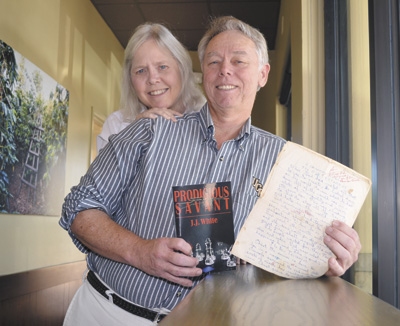
JJ White, author of Prodigious Savant, Deviant Acts and Nisei, interviewed by the local Viera Voice and the Senior Life of Florida newspaper.

JJ White, author of Prodigious Savant, Deviant Acts and Nisei, interviewed by the local Viera Voice and the Senior Life of Florida newspaper.

jj-white-9959c0ab

White’s presentation will be at the Cocoa Beach Library on May 13th at 2 pm.

http://www.vieravoice.com/May-2015/When-it-comes-to-page-turners-its-all-about-the-story/

J.J. White J. J. White | Author  Facebook Author Page

Represented by Loiacono Literary Agency www.loiaconoliteraryagency.com

Published by Black Opal Books www.blackopalbooks.com


Stephen Doster’s biography of Marjorie Catherine Terry Terry-Smith Doster, Her Finest Hour, has been acquired by Argus Publishing.

Stephen Doster’s biography of Marjorie Catherine Terry Terry-Smith Doster, Her Finest Hour, has been acquired by Argus Publishing.  (release 2015)

  1 (2)  1 (1)

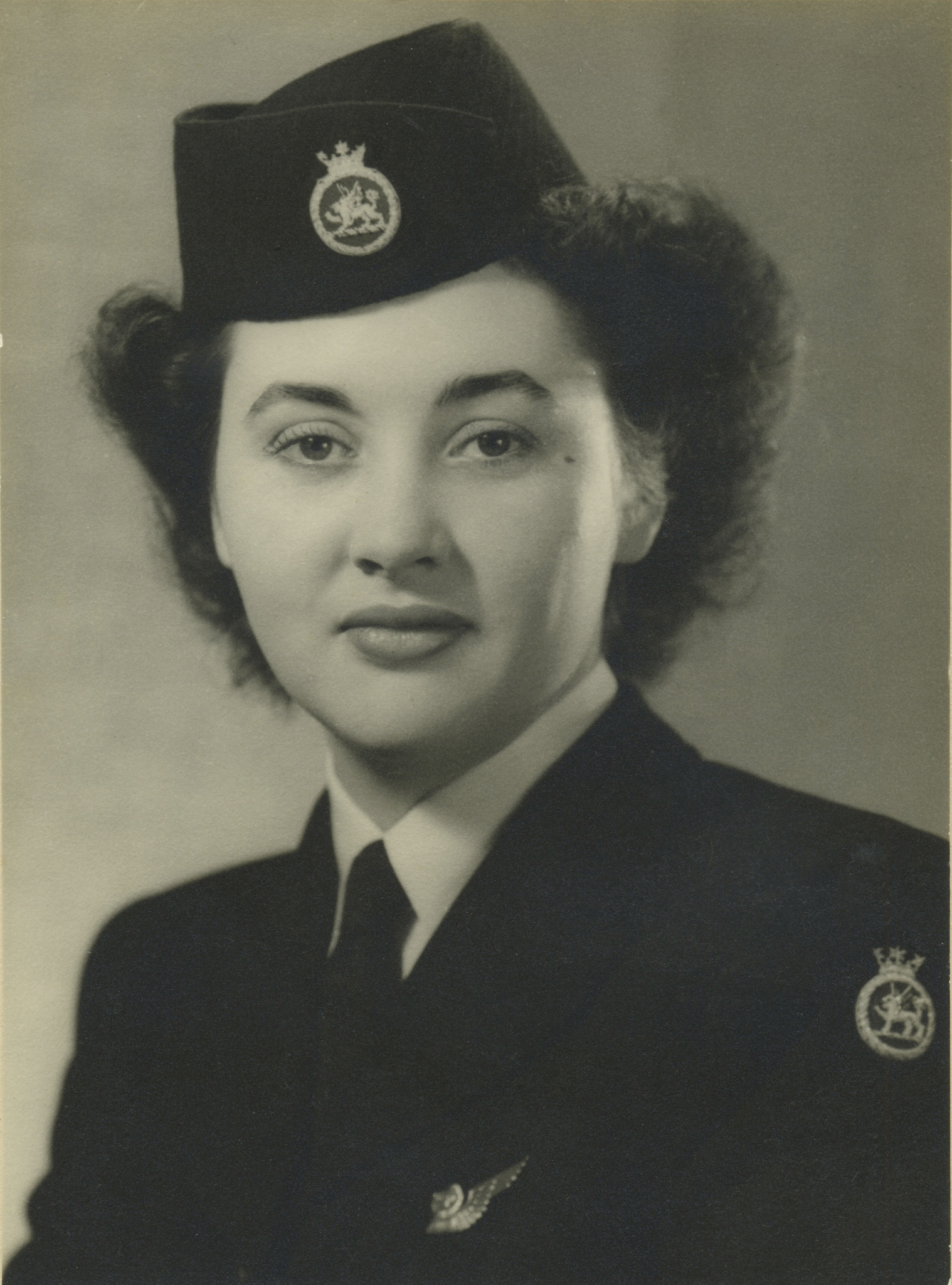
Terry Doster, who will turn ninety-two this August, as a teenager joined the WAAF (Women’s Auxiliary Air Force) in London, during WWII. She accomplished so many things cutting-edge for women of that day: worked in RAF (Royal Air Force) Operations Rooms, was an ATC (Air Traffic Controller), volunteered to do assignments no one else dared simply because she had never done them before, and, after the war, she was one of the first female flight attendants for the BOAC (British Overseas Airways Corporation), now known as British Airways. This memoir is a faithful transcription of Terry Smith’s own words.

Her Finest Hour serves as a reminder that freedom isn’t free and that the most unlikely people, including a typical girl in art school, can rise to life’s greatest challenges.

Stephen Doster

Stephen Doster was born in England and grew up on St. Simons Island, Georgia.  He is a student of history and has extensively researched the Gullah and Geechee cultures of South Carolina and Georgia. He received a degree in Marketing from the University of Georgia, has recently received his Master of Liberal Arts and Science degree with a certificate in history and is an assistant editor for a peer-review journal at Vanderbilt University.

His first novel, Lord Baltimore (John F. Blair, 2002, nominated for the Pulitzer the same year), is the fictional account of a young man’s travels through Gullah country along the Georgia coast.  His second book, Voices from St. Simons: Personal Narratives of an Island’s Past (nonfiction, John F. Blair, 2008), is an oral history of Coastal Georgia. Published by Deer Hawk Publications: Georgia Witness (nonfiction, 2012) is a compilation of twenty-six interviews of the most influential Georgians of the 20th and 21st Centuries, Shadow Child: Tales From The Georgia Coast – Sixteen Works of Fiction & One True Story (2012) chronicles a historical artifact and the people it impacted from 1597 to the 21st Century, Rose Bush (2013) is a southern novel depicting a conflict between environmentalists, a paper mill, and the aristocracy of a rural Georgia town, and Jesus Tree (2014), a novel based on the true story of a black man who was wrongly convicted of murdering a family in Southeast Georgia in the 1930’s. www.sdoster.com

Represented by Loiacono Literary Agency www.loiaconoliteraryagency.com


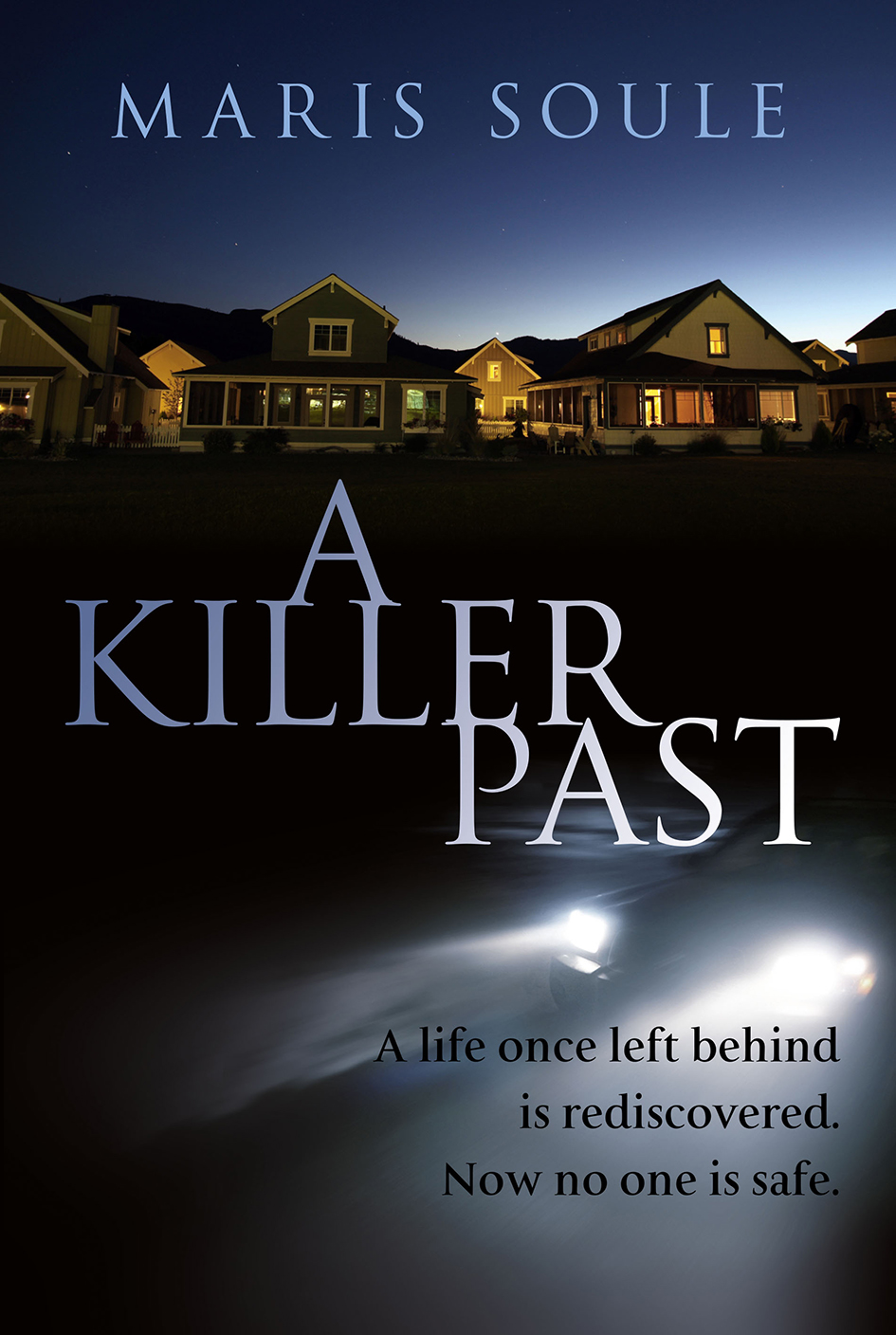
From U.S. to U.K., Maris Soule’s Killer Nashville Claymore Award Success Story

From U.S. to U.K., Maris Soule’s Killer Nashville

Claymore Award Success Story

A Killer Past cover

Click here: Maris Soule’s Success Story
Maris Soule, who was a Killer Nashville Claymore Award finalist, believes she’s come a long way in her process and has since ventured into mysteries with “The Crows” and “As the Crow Flies”, novels in her PJ Benson series.

“What an exciting moment when I received the phone call that “A Killer Past” was one of the top ten finalists,” Maris said. “Alas, my entry didn’t win, but having that award helped in my search for an agent to represent the story. Within three months of signing a contract with the Loiacono Literary Agency, they found a home for the book with Robert Hale Ltd.”

Now, “A Killer Past” is not only being distributed in the US and Canada, but released as a hardcover in the UK and as an e-book.

Read Soule’s full success story or read other Killer Nashville success stories. You can also visit Maris Soule’s website. She will be attending the Killer Nashville Writers’ Conference in 2015 to share her journey and how Killer Nashville played a role.

Who enters the Killer Nashville Claymore Award?

  • New Unpublished Authors
  • New York Times Bestselling Authors Seeking a Kickstart
  • Published Authors Reinventing Their Careers

2015 Claymore Award Deadline: April 30, 2015

More Information About the Killer Nashville Claymore Award

Ready To Enter Your Unpublished Manuscipt?

Visit the Official Claymore Award Website


Insights Into the 150th Anniversary of Abraham Lincoln’s Assassination; Debunking the “Happy Slave” and Other Myths

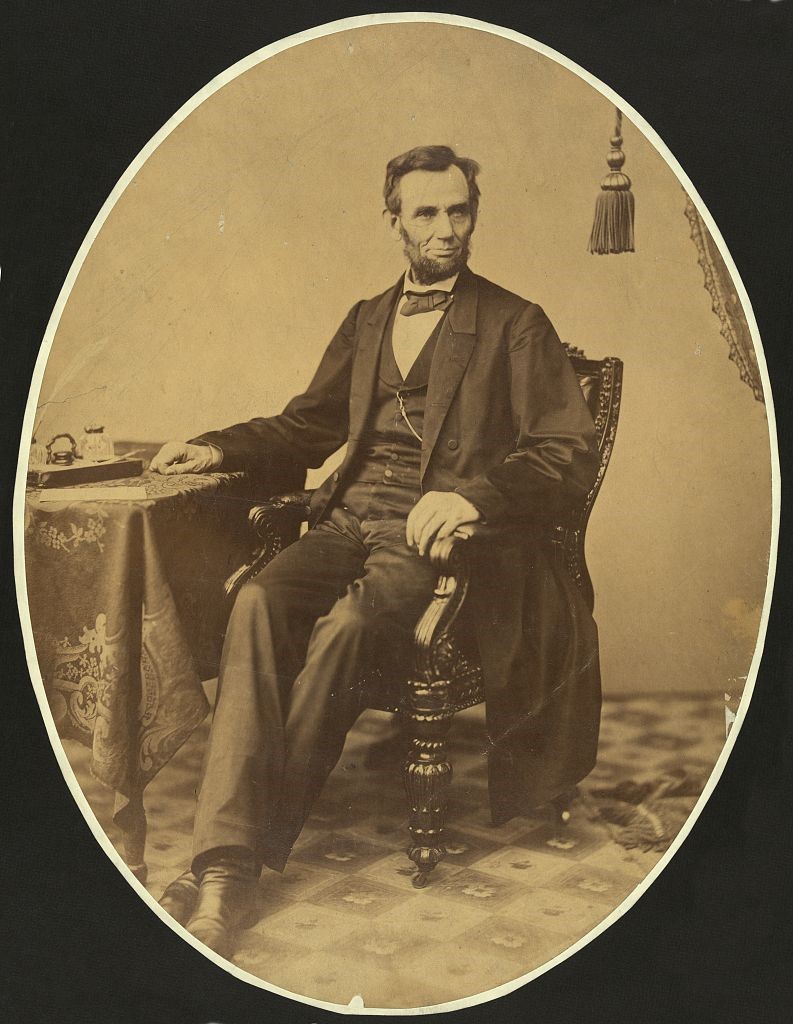
Any mention of, much less any anniversary associated with, Abraham Lincoln evokes a lump in the throat and palpitations in the heart of even the most casual reader of history. April, 2015, saw the 150th anniversary of Abraham Lincoln’s assassination. There are so many great Lincoln biographies and essay collections out there. Among my favorites is David Herbert Donald’s Pulitzer Prize winner Lincoln.
Lincoln

It is no wonder Abraham Lincoln evokes our deepest feelings and thoughts. There are few figures throughout history who dominate a critical nexus of cataclysmic change, yet can also be labeled a “great soul.” Abraham Lincoln is one of these rare leaders.

You know the politics. The Union victory in the Civil War transformed the public’s perception of our country from a federation of states to the “one nation” it is today. On top of that, Lincoln shepherded the fractious country and government to free America’s slaves. Considering that slavery was the main source of wealth held by Southern aristocracy, that’s something.

Yet some important misconceptions about Lincoln haven’t entirely worked their way out of the public’s consciousness. For example, most of the major historians after the war were Southerners. These writers tried to label the conflict “the War Between the States,” inferring that the United States was a confederation of states, with perhaps the legal right for states to secede. Today, the appropriate term, “Civil War,” is nearly universal, with “War Between the States” buried in the dustbin of history.

Another misconception of Lincoln that still persists is that he felt ambiguous about slavery. Nothing could be further from the truth. Just read his Coopers Union speech, which propelled him from a relatively obscure politician to national prominence as the front runner for the Republic presidential nomination. There is no ambiguity in that abolitionist-like speech. That, as a politician, he tried to find a way to end slavery without war explains the compromises and ideas he advocated along the way. He believed slavery would die a natural death if it wasn’t allowed to expand. Also, he proposed a nation overseas to resettle slaves, which became Liberia. But, of course, with the value of bondsmen, the largest asset “owned” by the wealthy, powerful ruling Southern aristocracy, taking slavery away inevitably was going to require a trial by fire: war. Another myth created by early Southern historians was that the war wasn’t fought over slavery. Nonsense. Read this excellent book on this subject: The Fiery Trial: Abraham Lincoln and American Slavery by Eric Foner.

A Central Theme of The Lies that Bind

Refuting the implicit and explicit lies about slavery is central to my forthcoming novel, The Lies that Bind (to be published by TouchPoint Press, 2015). One of the protagonists, the visionary charlatan Durksen (Durk) Hurst, aka “Dark Horse,” forms a secret partnership with a group of slaves to build their own egalitarian plantation. This deception is the Dark Horse partners’ subterfuge to work their way around the controlling hypocrisy of a slave/caste society in which they are stuck. These and my other characters must contravene many lies—including gender, race, and slavery—that can only take them so far, until history’s transcendent tides make them face the truth. Indeed, even my fictitious Southern hamlet’s richest aristocrats, the powerful French family, are bound by lies even more than the average citizen. Doesn’t this dramatization in history parallel the ambiguous nature of our own lives and society today?

In Lies, using drama, I try to dispel some of the myths associated with slave society. In his second inaugural address (http://www.abrahamlincolnonline.org/lincoln/speeches/inaug2.htm), President Lincoln speaks of war as being the logical consequence of Southern wealth compiled by the sweat and blood of slave labor. In my novel’s secret partnership, where black and white men are virtually equal, their successes are the result of all the partners’ labors and talents. In fact, much of the brainwork behind the plantation’s success is from the wise and experienced Big Josh, a slave. In reality, have we always recognized the contribution slaves made to helping build America?

Fortunately, we no longer believe the myth of the “happy slave.” Studies show a startlingly high percentage of slaves died from overwork, inadequate nutrition (slaves were always hungry), and maltreatment. As a result, not surprisingly, emotional depression in slave quarters was universal. Would you have been happy? To maximize their investment yield, slave owners worked their human chattels long hours, kept feeding costs to the barest minimum, and used harsh methods, especially the lash. A good study of slavery (interestingly, with parallel illustrative sections on white men enslaved in Africa) is John W. Blassingame’s The Slave Community: Plantation Life in the Antebellum South.

In Lies, the Cassandra-like fugitive Antoinette DuVallier predicts that war is inevitable, saying of the Southern aristocracy, “The fools are hell-bent to ride on white horses under brave banners, sabers waving and plumes flying, and bring this land to waste and ruin. To drown their fortunes, families, and lives in rivers of blood—and nothing will stop them.” In truth, the South seceded when Lincoln was elected because it knew he wanted to end slavery. Period. Any other explanation is false, an attempt to build and maintain a myth.

There is one anomalous section toward the end of Lies that refers to the bravery of both the Confederate soldiers (most of whom did not own slaves) and the Union soldiers. This narrative hopes to dramatize what Lincoln went through in guiding the war effort to its conclusion. It also dramatizes his heavy-hearted burden for the suffering the war inflicted on both sides, upon the families, the widows and orphans, he addressed in his second inaugural.

And this is where Lincoln’s assassination most harmed the country. Lincoln told Grant, “Let (the South) up easy.” His policy for the future was, as he most eloquently stated: “With malice toward none, with charity for all.” Had reconstruction been effected under Abraham Lincoln’s benevolent hand, the devastated South might have recovered a hundred years earlier than it actually did. And this is the greatest tragedy about Lincoln’s assassination; that after he was shot, he then belonged “to the ages” rather than to the nation that so badly needed his great wisdom and charitable spirit.

Next Week: Meet Devereau French’s mother—and master manipulator—the reclusive Missus Marie Brussard French, who Turkle’s residents believe “sits in her dark room playing chess against God.”

Publication date of The Lies that Bind to be announced!

Watch for publication of Ed’s novel, The Lies that Bind (TouchPoint Press, 2015), a darkly ironic antebellum mystery/drama set in Turkle, Mississippi, 1859-61. Ed Protzel’s views, opinions, and ideas expressed in this blog are his alone. Blog copyrighted by Ed Protzel © 2015.


Argus Publishing takes DC Doeks’ historical fiction, The Road to Royalty, the story of King David

Argus Publishing takes DC Doeks’ historical fiction, The Road to Royalty, the story of King David.


Deon

Saul’s insane jealousy, Pitheus’ ideals of joining Europe and Asia with Israel as the heartbeat of power, David’s God-driven desire to be King, and, the thread which binds them all, Michel—Saul’s daughter, Pitheus’ confidant and David’s true love.  What a story!

David and Michal


Ben-Hur, Spartecus, Gladiator and The Greatest Story Ever Told all rolled into one, and it is based on Biblical fact.


When the destiny of God’s chosen threatens a dynasty of the fallen…


Saul, an arrogant egocentric king spirals Israel into spiritual defiance and political chaos.

Amid the unrest, Pitheus, a Greek trader chases prosperity as bronze gives way to the Iron Age. He befriends Michel and an idealistic young priest, teaching him the first forms of linear writing. Together the two men witness one of the most prolific adventures of the ancient world.

As a young boy, David saves Israel from slavery. Seeing his potential, King Saul runs him through the ranks of his army, breeding a fearless warlord whom Israel elevates to hero status. Jealousy grips Saul as he sees David as a threat to his throne and hate drives him to plot his murder. David is betrothed to the king’s daughter, Michal, but their fairytale romance is tainted with blood and woven with deceit as her father manipulates all. Exposed, their lives are threatened in a sequence of gripping events that plot the road they are made to endure before David is anointed to reign as Royalty.

In a world where the evil of a dynasty freely unleashes the wickedness of its king, love rises above circumstance, honor above deceit, and trust is the adrenalin that runs through this heroic tale of how a shepherd boy became a king.

Doeks’ is steadily working on the sequel and three others as well. Living in South Africa, he has a different view of the world which is reflected in his classic writing. His other works include: Son of Thunder, School Fees and Lavender Breeze. Represented by Loiacono Literary Agency https://loiaconoliteraryagency.com/authors/dc-doeks/  Published by Argus Publishing http://a-argusbooks.com/home.htm


The Holy Land

The Holy Land

download (1)

Water covers my boot as I step from the canoe. Of all the stones that lay on the beach two stared upward into my eyes. Freeing one with the blade of my paddle I harvest it from the sand. My fingers trace its shape, sensing the influence of a thousand centuries. In my hand is condensed time, deep and patient beyond comprehension. Picking up the other, I hold them together in my palm and press the pair to my chest, two tablets of stone imprinted by the finger of God in these Holy Lands. I close my eyes, centering down for what they may have to tell me, listening with my heart for words not heard with the ear or spoken with the tongue. Here, on the shore of the Chippewa, an inner stillness ascends as the earth speaks . . . “Creator’s hand sustains the life of every creature, the breath of all humankind, sculpts every hill. Ask the animals and they will teach you, let the fish in the waters inform you, the birds of the air sing their knowledge to your spirit. Let your heart hear the Scriptures of Creation. Her communion is love.” . . . A tear of gratitude forms and slips from my eye onto the sand. Yes, the earth speaks. For me, no cathedral, no temple, so imparts serenity and awe as does a simple stone, a single leaf. Granite, quartz, pine and oak, beetle and gazelle, the waves of the sea and breeze on my cheek, all, the myriad voices of God. . . . Returning the stones to rest with their kin, I have again heard His whisper. The earth speaks, for these are the Holy Lands. www.theteacherwithin.com

ONE WORLD – ONE FAMILY OF MAN – ONE CREATOR OF ALL