Author Archives: Jeanie

About Jeanie

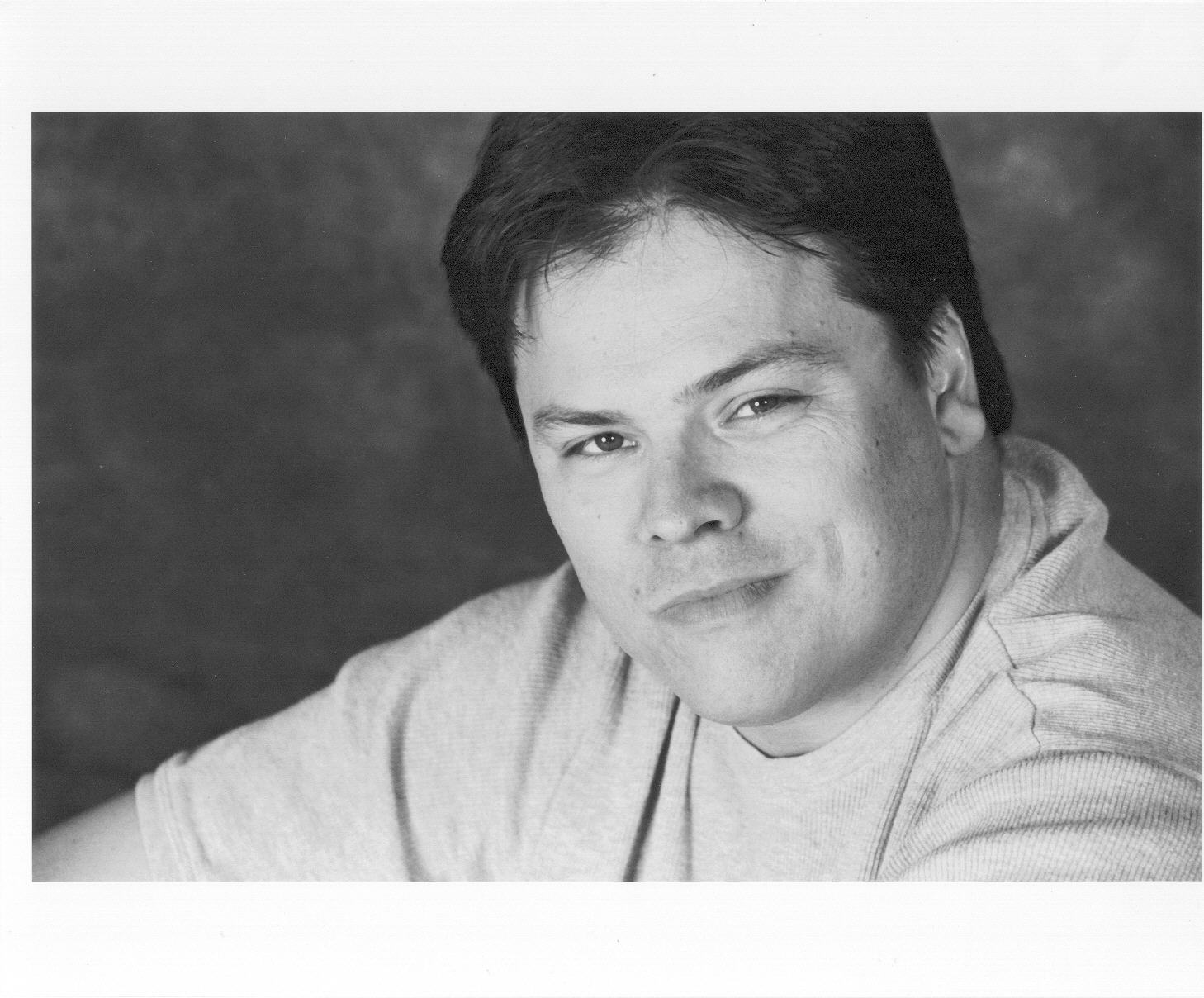
I am President of Loiacono Literary Agency, LLC. I have been a literary agency for thirteen years and have over sixty clients and have sold over 200 books to date.

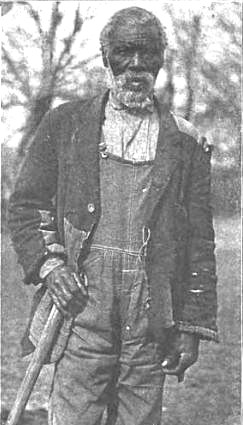
Introducing Big Josh: the Undervalued African-American

Big Josh

Each semester I have the privilege of teaching a writing course for college juniors and seniors at the University of Missouri-St. Louis. This past semester’s was an evening class attended by so-called “non-traditional students,” meaning I had more students who were a bit older, worked full time, and had full family responsibilities, including wives or husbands, children, and even grandchildren to support. And although school is quite a drag on their limited time and energies, they push ahead to get their degrees.

A good percentage of the students were African-American, and their personal sacrifices and drive to excel would open the eyes of any citizen whose perception of them was formed basically through the lens of local newscasts, sensationalized headlines or talk radio, and little to no actual interaction with them as individuals (more in future blogs). On top of their other responsibilities, the adults in my class devote much time to their churches and charities, to helping others when some of them could use a helping hand themselves. Is it any wonder I so greatly admire their work ethic and perseverance in their efforts to better themselves and their families?

Big Josh: Giving Credit Where Due

One of the major characters in my novel, The Lies that Bind (to be published this year by TouchPoint Press), is Big Josh, a man of great heart and intelligence in his fifties who has lived his entire life as a slave. In one of the novel’s major plot streams, Big Josh and his group of enslaved men, hopelessly stranded in the Mississippi wilds, take great risks to form a secret partnership with the visionary charlatan Durksen Hurst to build an egalitarian plantation they will call Dark Horse. White and black share the work—and the deprivation—of building Dark Horse. However, there are limits to well-meaning equality in a society structured to be inherently unequal.

Having run the plantation back home, Big Josh is the real strength and brains behind the success of the farming side of their plantation scheme. He is a deep thinker and peacemaker within the ill-fitting partnership, a man with a tragic past (how many slaves that survived into their fifties didn’t have tragic pasts?). But with Durk serving as figurehead “white master,” the town’s admiration, and fear, are bestowed solely on Durk—whose only farming experience was busting up clods for his drunk of a daddy. Big Josh and the other partners are virtually invisible. Ironically, Durk, whose incompetence is matched only by his naiveté and blind ambition, is the one who puts their endeavor at greatest peril.

This dichotomy exposes one of the deeper meanings of the novel, and one of the currents in our society today. The antebellum South’s wealth was based on agriculture, but the wealthiest elite made their fortunes on the backs of slave labor. And slavery was not a benevolent institution. Don’t the bonded laborers deserve some credit—much less some remuneration—for the South’s extraordinary successes? But whose statues and portraits grace the region?

In one of the greatest American novels, William Faulkner’s Absalom, Absalom!, Thomas Sutpen builds Sutpen’s Hundred on the backs of slave labor; yet Sutpen becomes the legend. Isn’t this skewed slant symbolic of the antebellum South? Why shouldn’t Big Josh—or so many like him—get at least a public mention? As in my novel, slaves would have been satisfied to simply not be slaves, allowed to eat what they grew, to be warm when they could earn enough to buy a blanket, to live in a house they built for themselves—and to not live in constant fear.

But 700,000 men, white and black, would have to die before slaves could even come close to achieving that minimum condition. And even today, a skewed view of African-Americans by too many continues to hold them back.

www.edprotzel.com

Published by TouchPoint Press www.touchpointpress.com

Represented by Loiacono Literary Agency
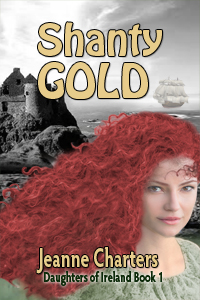
 

What is the meaning behind Jeanne Charters’ novel Shanty Gold?

What is the meaning behind Jeanne Charters’ novel Shanty Gold?

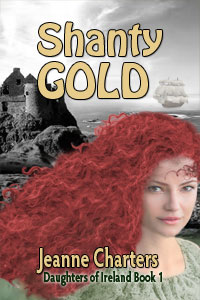
ShantyGoldFront-200x300

Shanty Gold is so named because in many Irish-American communities, there are three distinct socio-economic classes. The poor and uneducated are called “Shanty Irish.” As a family progresses into middle class, they are deemed “Lace Curtain Irish” (my second book of the trilogy, Lace Curtain). When they become successful and financially secure, they are named “Silk Stocking Irish” (my third novel, Silk Stocking).

Each class holds its challenges. Each novel tells the story of a particular girl and how she survives or is destroyed by the trials of her time. Each girl is the daughter of the woman in the preceding novel.

How did I choose my first heroine, Mary Boland?

My great-grandmother, Mary Bolen, was a woman I never knew. I heard her name whispered by my mother and aunts, though she died before they were born. The name was mythical in my family. Extensive research in Ireland turned up nothing about her. My family spelled her last name Bolen—a name I never found in any Irish county, probably due to illiteracy. However, in Kinsale, I saw a store called Boland’s. Voila! That gave me the possibility of her correct name and town.

From the time I was a little girl, I had a recurring dream of a young girl with red curly hair riding a horse bareback along the coast of Ireland. She wore a sack-cloth dress and that flaming hair streamed behind her like a banner. Finally, I realized that it was Mary and that she wanted me to tell her story. She came to me in dreams, informing me when I screwed something up. Irish women are bossy, you know. That’s because we’re descended from goddesses and banshees. Both of these legends play into Mary Boland’s character.

Several years ago, the New York Writers Institute, under the direction of William Kennedy, accepted me into a ten-person juried writing group. I was one of two women in the group. It was taught by then poet laureate of Ireland, John Montague.

In this class and others since then, I learned that a novel should begin at a time of great change for the protagonist. Shanty Gold opens as Mary Boland leaves Kinsale on foot headed to the Cork Harbor in August, 1849. She is thirteen-years-old and starving. She is illiterate and ragged and has just buried her mother and baby sister, dead of the famine. She must get on a ship to America to find her beloved Da, gone there to earn money to bring his family over. But she hasn’t a farthing in her boot.

Although Mary is betrayed by a British woman at the harbor who sells her as a sex slave to the crew of a coffin ship, she survives with the help of an African slave boy, Kamua Okafor, son of an African witch doctor. Kamua becomes Mary’s life-long soul brother. Both Mary and Kamua eventually accomplish their destinies, he as a successful medicine man and she as a life-saving midwife.

The novel has many moments of terror, but at its heart, it is a story of character. The character of an Irish girl. Jeanne Charters www.jeannecharters.com (release 2015)

Published by Rogue Phoenix Press www.roguephoenixpress.com

Represented by Loiacono Literary Agency https://loiaconoliteraryagency.com/authors/jeanne-charters/
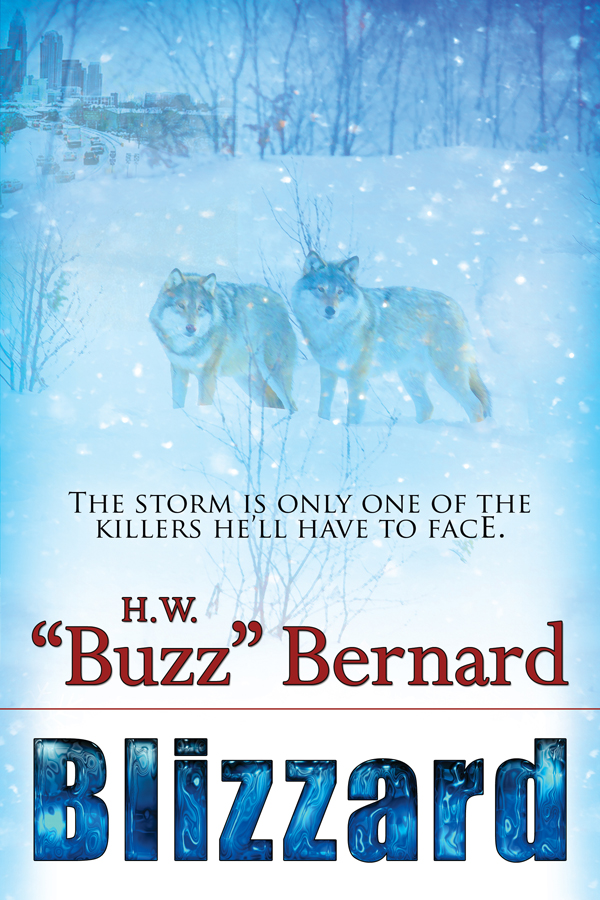
 

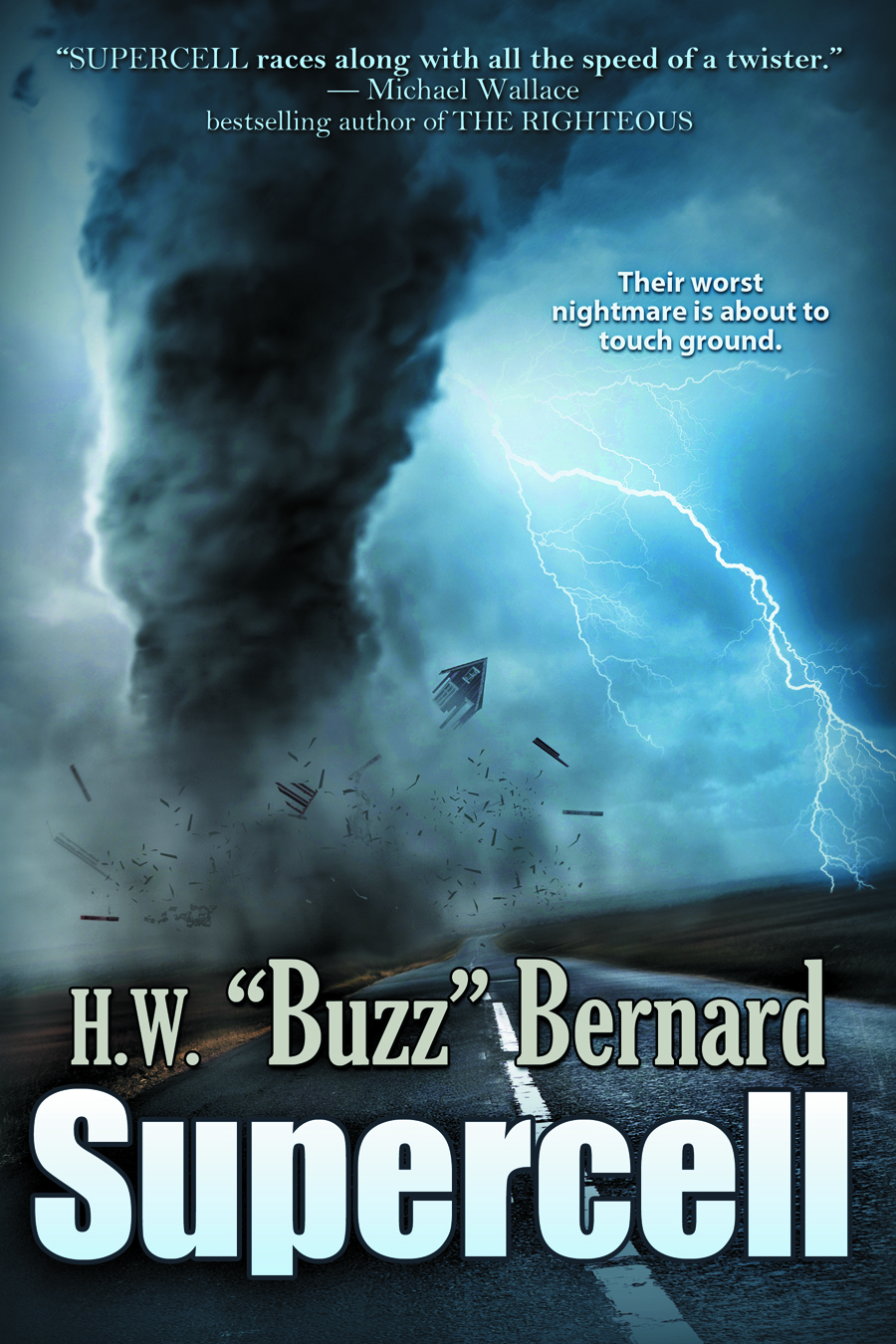
Buzz Bernard, author of EYEWALL, PLAGUE, SUPERCELL and BLIZZARD, on the The Boomer and X Show (podcast)!

Buzz Bernard, author of EYEWALL, PLAGUE, SUPERCELL and BLIZZARD, on the The Boomer and X Show (podcast)!

Award-Winning Novelist Buzz Bernard0

May 6, 2015

BLIZZARD EYEWALL Plague Supercell

In Episode 16 we briefly review results from the “Super Saturday” of sports and then talk about some of the holidays and observances in the month of May.  We then go right into a fascinating conversation with veteran, meteorologist and award-winning author Buzz Bernard about his multifaceted career and about his life as an author.


Mr. Bernard shares his story about how he first became interested in writing and the experience of pushing through some two hundred rejection letters before finally getting an agent and becoming published.  He also talks about the process he follows in writing a book, including researching his subject matter for authenticity.  And we wrap up by covering some of the promotional aspects of being a published author.

We look forward to hearing from you @ theboomerandxshow@yahoo.com

Thanks for listening!
Read more at http://www.theboomerandxshow.libsyn.com/#jMJC27Ej8IE5pGXD.99

           
The Boomer and X Show

The Boomer and X Show is a podcast that covers a wide variety of topics from football and current events to movies and music. We throw in a few laughs for good meas…

View on www.theboomerandx…


A Star is Born!

ShantyGoldFront-200x300-72dpi

Ta da—this is the premier showing of the book video for Shanty Gold. Thank you, Nathan Chesky. I found Nathan through Asheville Creative Alliance, and I think he did a great job.

Came to my home and made me so comfortable that I didn’t flub too many lines. Also, didn’t use the F-bomb once. Yay, Jeanne.

This short video does a fair job of telling you my process in writing the book, and I hope you’ll watch it and let me know what you think.

To see the video for Shanty Gold, click here or go to https://youtu.be/leLnWsvkj_A

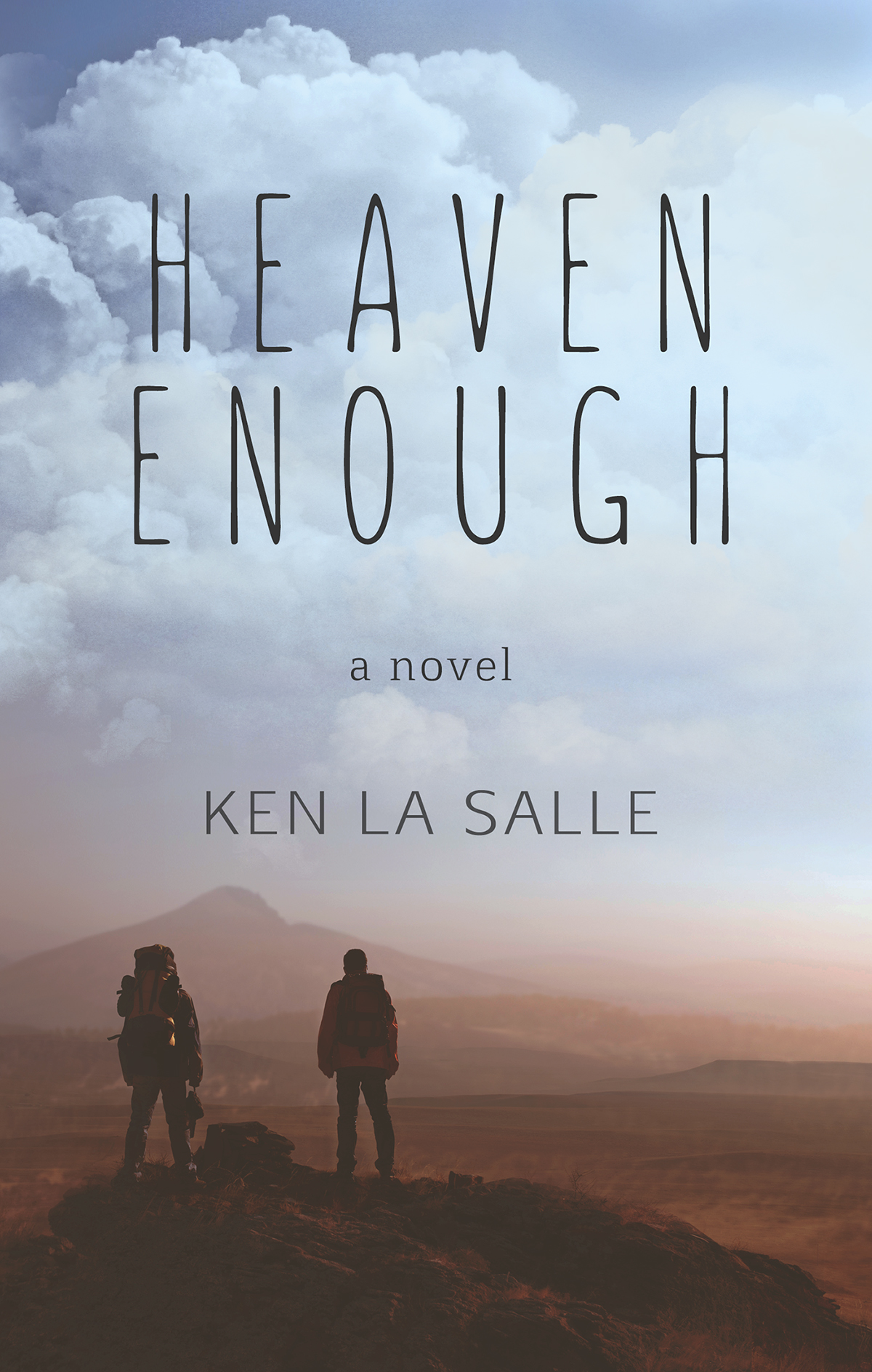
Heaven Enough. Finding stories on the PCT without going “Wild”

HeavenEnough_Amazon Ken-01ed

Heaven Enough. Finding stories on the PCT without going “Wild”

Since the 1920’s, the idea of the Pacific Crest Trail has inspired people from around the world to achieve more and to be more while connecting to the western crest of the United States and the Earth from which they were born. Before its completion in 1993, the Pacific Crest Trail (or PCT) saw thru-hikers from around the world. Then, in 2012, Cheryl Strayed popularized the PCT with her dynamic memoir, Wild.

Strayed’s is not the only story on the PCT, however. There are, in fact, thousands.

Recently, the PCT has also begun inspiring novelists to place their stories amongst the switchbacks and water caches of the trail. One of those writers is Ken La Salle, who placed his romantic tale of lost souls in the first stretches of the trail, giving it the name Heaven Enough. The title refers to a poem left by the wife of the story’s protagonist, after she suffers an untimely death. “What would it be like if I had heaven enough?” it reads. When Matt, now a widower, takes to the trail to leave the ashes of his wife, he is met by a woman just as shattered by life as he was—Heather.

Without the crucial ingredient of the PCT, this might become just another love story. But it is the PCT that tests them, that breaks them down even more, that takes from them everything but who they truly are. That is, after all, the power that the thru-hiking experience provides; a method of stripping away all the nonsense of everyday life. Novels placed in this environment benefit from this power in an environment as uniquely American as the Pacific Crest Trail.

Heaven Enough has been called “a strong narrative of redemption and hope” and “the perfect book to curl up with on a rainy day” by reviewers. One reviewer wrote: “In a journey of self-reflection, Ken La Salle asks the one question we never really ask in marriage: do we really know the person we love most? In the heart-wrenching and sometimes comical journey of Matthew (Matt) Murphy, Mr. La Salle shows us through tragedy, anger, remorse, and grief one can find their soul and true purpose in life in the least likely places.”

La Salle is an avid hiker and the author of several books including The Wrong Magic, the forthcoming memoir, Climbing Maya (Kal-Ba Publishing, 2015) and Dynamic Pluralism, a muse of ethics (Kal-Ba Publishing, 2016). As a lifelong resident of Southern California, he has hiked sections of the PCT and looks forward to undertaking his own thru-hike very soon. www.kenlasalle.com Published by Limitless Publishing www.limitlesspublishing.com Represented by Loiacono Literary Agency www.loiaconoliteraryagency.com BookLaunch  Amazon  B&N  Shelfari


I believe God wants you to know that you can be happy right here, not tomorrow, not in ten minutes, but now. You can be happy right now.

I believe God wants you to know that you can be happy right here, not tomorrow, not in ten minutes, but now. You can be happy right now.
Byron Katie said that, and she is right. Happiness is allowing yourself to be okay with what is, rather than wishing for, and bemoaning, what is not.
Obviously, what is is what is supposed to be, or it would not be. The rest is just you, arguing with life. Somewhere along the way you will have to learn to just Trust Life. (Read that, “Trust God.”)
Why not start today? www.CWGPortal.com

Mark your calendars—May 14-18—The Woods at Barlow Bend by Jodie Cain Smith will be featured in BookBub for free downloads

Mark your calendars—May 14-18—The Woods at Barlow Bend by Jodie Cain Smith will be featured in BookBub for free downloads. Amazon

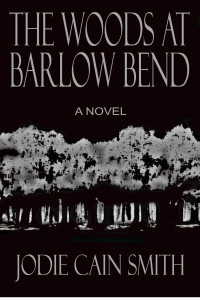
Book-Cover-200x300

An amazing, true story about death, loss, and redemption during one of the most tumultuous times in U.S. History, The Woods at Barlow Bend follows Hattie from the time she learns of her mother’s horrible death and the murder trial of her father, through her adulthood. Hattie learns of a strength she never knew she had, and that loving someone means forgiving them as well.

www.jodiecainsmith.com

Published by Deer Hawk Publications www.deerhawkpublications.com

Represented by Loiacono Literary Agency www.loiaconoliteraryagency.com