Author Archives: Jeanie

About Jeanie

I am President of Loiacono Literary Agency, LLC. I have been a literary agency for thirteen years and have over sixty clients and have sold over 200 books to date.

Buzz Bernard at SWA in June!

Buzz Bernard at SWA in June!

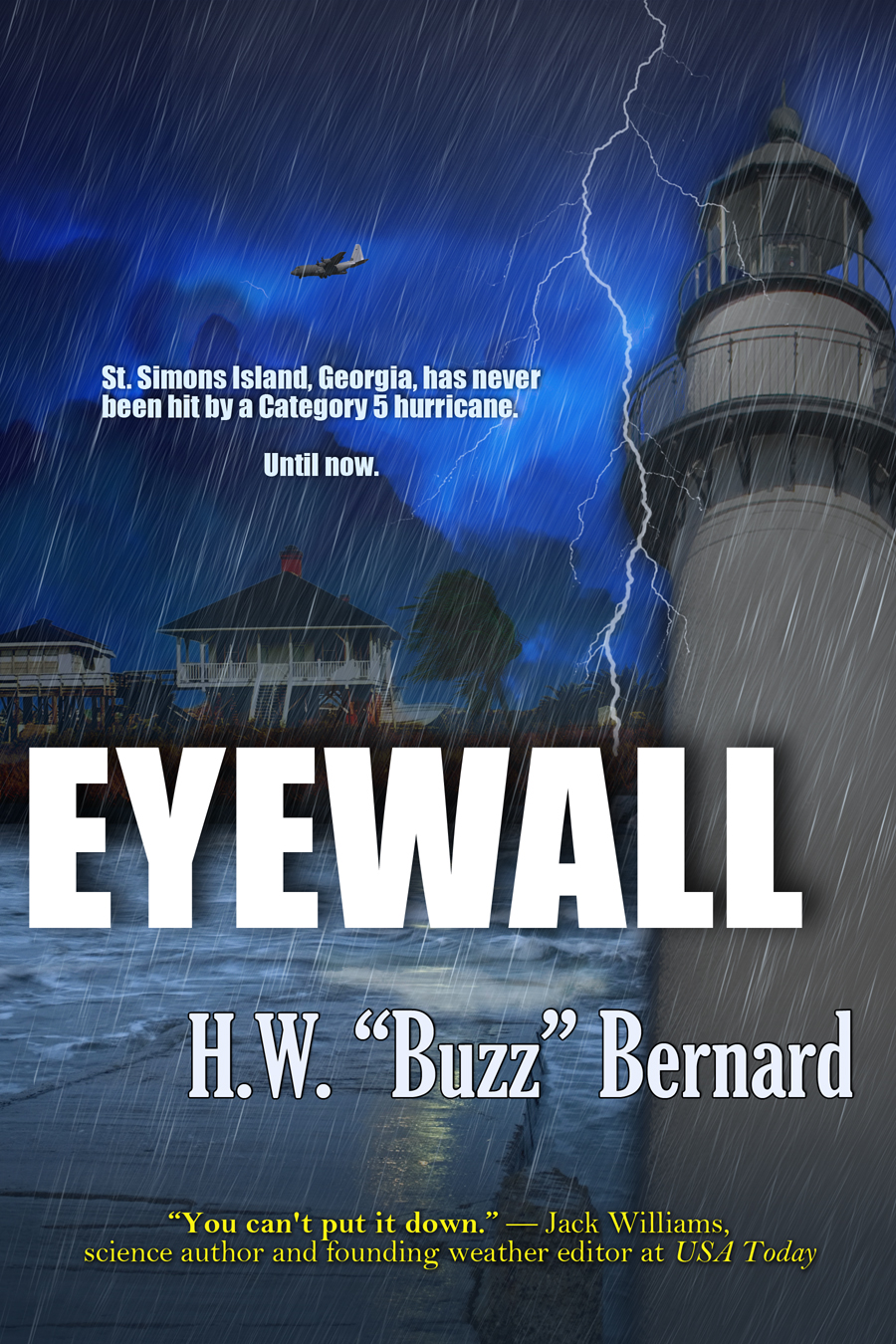
Buzz Bernard is the VP of SWA (Southeastern Writer’s Association) and Bookstore Manager during the Southeastern Writer’s Association Writer’s Workshop, June 14-18th at Epworth by the Sea on beautiful St. Simons Island, Georgia. Come and meet the Bernard and get your signed copy of EYEWALL or PLAGUE. Next year he will have SUPERCELL!

Buzz Bernard’s books to be in Hollywood film!

Buzz Bernard’s books to be in Hollywood film!

http://www.dreamstime.com/-image8272816 Eyewall-frontcover

Jim Hunsaker with Universal Pictures Clearances Department, representing the Producers of the new film Endless Love, has received permission from BellBooks, publisher of Buzz Bernard’s natural disaster series, to use his two books EYEWALL and PLAGUE as set dressing in their Bookstore Set, and in the main character Jade’s childhood home. 

Synopsis: Universal Pictures is in production on a theatrical motion picture entitled “Endless Love”.  Shana Feste (“Country Strong”) is set to direct Alex Pettyfer (“Magic Mike”) and Gabriella Wilde (“Carrie”) in the lead roles.  In this romantic drama, a young man (Pettyfer) falls for a college-bound young woman (Wilde) with their ensuing relationship turning obsessive and all-consuming.   The woman’s disapproving fathers tries to thwart their romance in order to protect her future.

We are so excited about the possibilities…It only takes one person with vision to see a series of disaster movies based Buzz’s books. His next, SUPERCELL, is about a tornado chaser who has been commissioned to find an EF4/5 for a Hollywood film crew, but Mother Nature is not the only one to recon with, man can sometimes be more deadly.


BookMarketingBuzzBlog Interview with Jeanie Loiacono, President of LLA


Sunday, May 26, 2013

Interview With Jeanie Loiacono, President, Loiacono Literary Agency

What have been the challenges to being a literary agent the past couple of years? The musical chairs of the industry. Editors are here, there, everywhere. Keeping up with what they are seeking, where they are and if they are accepting submissions is a challenge. Smaller house are closing or being bought out by bigger ones, bigger ones are merging and imprints are sprouting or changing genres or adding them. It is a daily update. The one thing I do see is that some publishers do not take electronic submissions. This is archaic. I do not take hard copy submissions in order to save trees, time, money, space and it is not convenient to deal with papers. Oh, about time on my end… I wish I could be three or four people when it comes to Loiacono Literary Agency. I have so many GOOD submissions and I only do one a week, and sometimes it takes longer than that (size of the MS and other duties get in the way). There is a time for everything…Ecclesiastes 3, from the best book EVER written, The Bible.
How about the rewards? Seeing my surrogate babies in print. Oh, to hold that book! To see good reviews, sales numbers go up and read interviews and see pictures of my authors as they are signing books or their books are being presented to important people! Example: Tom Simmons’ The Man Called Brown Condor (the story of John Robinson, the man who help start Tuskegee Institute and who trained the Ethiopian Air Force, Sky Horse Publishing, 2012) was presented to the President of Ethiopia and he was honored at the Mississippi State Senate. See attached photos. I can tell you, I do not take on any junk! Everything I take on is top-notch and polished to a high shine before I send it out and 70% of those I have taken are have been acquired. It just keeps growing.
What can writers do to get their works published? POLISH, POLISH, POLISH that MS before sending to me. Even if it is the best story ever, I may not even look past the first page if it is riddled in errors. You may have a great story, but are clueless to the intricacies of great writing. You must also be tough enough to take ridicule, criticism and be willing to alter your “baby” to make it the best ever. I had a client who wrote a good book but was unwilling to make the changes the acquiring editor requested and the contract was dropped. You have to be flexible or you will not make it in this world of big publishing.
What are the publishers looking for these days? A little of everything, but it must be unique. The key is to have something no one else has ever done, grab the reader from the first sentence and not let them go till the last word. Some MSs start out good and then dry up like a river bed in a drought. Read and have your works read by people who know structure, grammar and literature; people who are not afraid to tell you if it is bad or needs work. That is what you want. Good reviews are for after it is released.
How do you work with authors to make their books better? I edit as I read it and make sure it is POLISHED before I send it out. When I get a submission, I read the query first. If it looks and sounds like the writer knows how to write, the work is a subject I like, it grabs my attention from the get-go and I am willing to forego doing laundry to read it (that is a sure sign it is GOOD), I will take it on. After I copy edit and decide I can sell it, I send it back to them with all the errors and changes highlighted for proofing; including an offer of representation. If the writer is agreeable, we go through the whole submission process for Loiacono Literary Agency (LLA). I am pretty darn thorough and I do not give up, even if it takes years. Then it is all about PR and marketing and keeping that author on the radar. The process never ends.
For more information, please see: www.loiaconoliteraryagency.com
.
 

SUPERCELL and the Texas tornadoes

Buzz Bernard’s new novel, SUPERCELL, due for release November 2013 became reality for me last night. Within fifty mile of my home in Dallas, there were 10 touch-downs, 6 people were killed and so many more injured, home were flattened, and vehicles tossed around like Matchbox cars. One woman was in her bathtub covered by blankets when her wall collapsed on top of her. When she looked up she realized they actually saved her; that was all that was left of her home. She was looking out at the darkening sky.

In SUPERCELL, Buzz brings all the intricacies of storm chasing to light. You have to read this one! Anyone who has experienced tornadoes, hail storms or severe thunderstorms will relate heavily. Hail the size of baseballs with spikes, never-ending lightening and wind that makes your lawn furniture fly like leaves in the wind! Below is the link Buzz sent me from last night. This was about 50 miles from us.

Pray for those who have lost and for those who are taking care of them: policemen, firefighters, EMTs, doctors, nurses, insurance employees, disaster relief agencies and their church families. Call your local Red Cross to see how you can help now and in the future.

https://www.youtube.com/watch?feature=player_embedded&v=O1zfHsF0dmY

Plague selected by Arts ATL as one of the six best summer beach reads by Atlanta authors.

Plague by Buzz Bernard is selected by Arts ATL as one of the six best summer beach reads by Atlanta authors. http://www.artsatl.com/2013/05/beach-reads-atlanta-summer-2013/

Beach reads: A half-dozen best bets for summer from Atlanta authors.

http://www.dreamstime.com/-image8272816 

PLAGUE by H.W. “Buzz” Bernard (Bell Bridge Books)

A lethal airborne Ebola virus spreads like a cold in an Atlanta day care center. While CDC virologist Dwight Butler investigates the origin of what could be an apocalyptic health crisis, Richard Wainwright, the new chief executive officer of Atlanta biotech firm BioDawn, investigates the purpose of a strange building near his office.

Wainwright’s discovery leads him on a hunt for a bioterrorist, who threatens to launch a second, greater dissemination of Ebola that could wipe out the entire population of Atlanta in a few days’ time. Inspired by Richard Preston’s The Hot Zone, Bernard’s second novel grapples with the complexity of disease, the crisis of contagion and the catastrophic danger of bioterrorism.

Richard stood, keeping his hand on the SIG and jamming the weapon more firmly into the waistband of his khakis. His heart hammered at the same rate as the furious Zydeco beat from across the street. His shirt, saturated with perspiration, clung to him like a wet dishrag. Not cut out for this…. Richard, understanding he was deep in enemy territory, decided to burrow even deeper. Hiding in plain sight.


Buzz Bernard signs third book with BelleBooks! SUPERCELL!

Buzz Bernard signs book three with BelleBooks! Due for release November 2013, you will need a paper bag for hyperventilating! SUPERCELL! Yes, tornadoes!

Buzz

When Chuck, a meteorologist, ventures out on his own to form a company that does storm chasing, the big bucks roll in until lightning strikes… literally. Out of work and living in a dive, he is approached by Hollywood with a million dollar deal – lead cinematographers to a violent EF-4 or -5 tornado. But they are not the only ones striking it rich with twisters, a brotherly pair of thieves are looting and killing immediately after tornadoes. Throw in an undercover FBI agent and Chuck’s son, a former Green Beret who is a less-than-willing participant, and you have non-stop, breath-catching, chill-bumps-all-over-your-body excitement page after page.

Buzz you did it again. First, you give us a reality check with EYEWALL; a CAT 5 hurricane can and may happen. St. Simons Island residents don’t get too complacent! Then there was PLAGUE; Ebola is real and there is not much stopping it after it is unleashed in Atlanta, Georgia. What is next? We cannot wait! You have our undivided attention!

A review of the biography, The Man Called Brown Condor, by Thomas E. Simmons

A review of the biography, The Man Called Brown Condor, by Thomas E. Simmons

By Carolyn Vance Smith, Natchez, Miss.

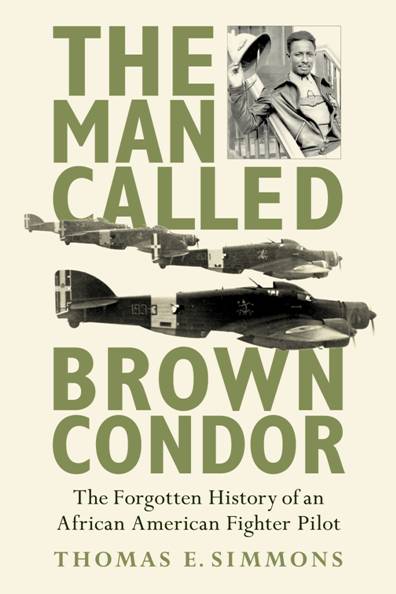
The Man Called Brown Condor cover art


If William Faulkner (1897-1962) had known John Charles Robinson (1903-1954), he would have embraced him. These two Mississippians lived more than 300 miles apart and never met, yet they shared the same philosophy of life.

Faulkner, a white man in Oxford in north Mississippi, and Robinson, an African-American man in Gulfport in south Mississippi, strongly believed in Faulkner’s 1950 Nobel Prize-winning remarks: “Man will not merely endure: he will prevail.”

Robinson definitely prevailed over extreme hardships throughout his life, beginning with widespread racism and prejudice in the Deep South, in Detroit and Chicago, onboard the German ship “Europa” and throughout the world.

No matter. At the height of his career in aviation, he was commander of the Imperial Ethiopian Air Force during the Italo-Ethiopian War of 1935.

Robinson’s story is told by Thomas E. Simmons of Gulfport, Miss., in a new biography called The Man Called Brown Condor: The Forgotten History of an African American Fighter Pilot. Simmons spent 30 years researching the amazing story of this overlooked American hero.

The book is an exciting ride. Beginning with Robinson’s childhood spent in a three-room school, he was an exceptional student who was fascinated by all things mechanical, especially airplanes. He saw his first aircraft at age 7 and was immediately captured.

His loving and supportive mother cautioned him by saying, “A black man has no business fooling around with airplanes.”

However, Robinson’s goal was set. By driving a truck and shining shoes, he earned money to attend Tuskegee Institute in Alabama, where he received a degree in automotive technology.

After college, with few options for work in Gulfport and against impossible odds, Robinson left for Detroit and his dream of working in automobile science. After many months with little money, his career took off, first as a mechanic for a fleet of taxis and trucks.

That work led him to work in aviation, first on airplane engines and then as a pilot.

He moved to Chicago to apply to the Curtiss-Wright School of Aviation, but he was turned down. The field of aviation was growing, but Blacks were almost never allowed access. Despite rejection and by sheer determination, Robinson and a friend, Cornelius Coffey, actually built an airplane and flew it.

There was no stopping Robinson after that. He was finally admitted to Curtiss-Wright, was a star student and was later an instructor at the school. He earned his pilot’s license in 1927 and set about establishing a school of aviation at Tuskegee, known in World War II for its famed Tuskegee Airmen.

Through coincidence, Robinson’s renown as an expert aviator eventually reached Haile Selassie, emperor of Ethiopia, a country which in 1935 was facing an invasion by Fascist Italy. Selassie, desperately needing pilots, invited Robinson to serve in the Imperial Ethiopian Air Corps.

Robinson immediately accepted, especially as a way to prove that Black pilots were capable of performing professionally.

More than half the book is devoted to Robinson’s time in Africa, where he built a cadre of Black pilots who carried messages from the front lines to Addis Ababa, the capital city of Ethiopia. His heroic exploits are detailed in the book, which reads like a novel.

The Italians did capture Ethiopia, but only for a while. During this period Selassie sought refuge in England. Robinson returned home.

Word of his success reached newspapers in the United States. Upon his return to Chicago, he was greeted by a crowd of 20,000 supporters. “The Chicago Defender” wrote, “There has never been such a demonstration as was accorded to the 31-year-old aviator who left the United States 13 months ago and literally covered himself in glory trying to preserve the independence of the last African empire.”

Robinson’s claim to fame was overshadowed by the coming of World War II. After the war, Selassie invited Robinson back to Ethiopia to rebuild his air force and create Ethiopian Airlines.

Robinson died at age 51, perhaps never knowing that William Faulkner said something else that Robinson likely agreed with: “Always dream and shoot higher than you know you can do. Do not bother just to be better than your contemporaries or predecessors. Try to be better than yourself.”

#


Tom Simmons receiving award at Mississippi State Senate

Tom Simmons receiving award at Mississippi State Senate

Gulfport  author Thomas E. Simmons, who wrote, The Man Called Brown Condor along with The Brown Condor, Escape from Archangel and Forgotten Heroes of World War II, was recently honored by the state Senate for his lifelong works and his legacy.

Best known for chronicling the legacy of Colonel John Charles Robinson of Gulfport, who is the subject of his book The Man Called Brown Condor:  The Forgotten History of an African American Fighter Pilot, was cited for his contributions to the literary world and his valor at telling the story of African American fighter pilots.

Simmons at state senate

Standing left to right during the presentation of Senate Concurrent Resolution 573 are Representative Sonya Williams-Barnes, Senator Tommy Gollott, Senator John Horhn, Thomas E. Simmons, Senator Debbie Dawkins and Senator David Jordan.

Tom Simmons honored by the Mississippi State Senate
Tom Simmons honored by the Mississippi State Senate

The Man Called Brown Condor cover art

Tom Simmons was called to the Jackson, Mississippi State Capital Building, directed to the Senate chambers in full session and given the following honor.

Simmons was deeply honored and humbled by the following award, and by the fact that after an acceptance talk, in which he got a little emotional over John Robinson, he received a standing ovation by the entire Senate.

MISSISSIPPI LEGISLATURE

2013 Regular Session

To: Rules

By: Senator(s) Horhn, Butler (38th), Butler (36th), Simmons (13th), Turner, Jones, Jordan, Jackson (11th), Jackson (32nd), Dawkins, Frazier, Simmons (12th), Burton, Fillingane

Senate Concurrent Resolution 573

(As Adopted by Senate and House)

A CONCURRENT RESOLUTION RECOGNIZING MISSISSIPPI AUTHOR THOMAS E. SIMMONS AND THE LEGACY OF COLONEL JOHN CHARLES ROBINSON OF GULFPORT, MISSISSIPPI, WHO IS THE SUBJECT OF HIS BOOK THE MAN CALLED BROWN CONDOR:  THE FORGOTTEN HISTORY OF AN AFRICAN AMERICAN FIGHTER PILOT.

WHEREAS, THE MAN CALLED BROWN CONDOR:  THE FORGOTTEN HISTORY OF AN AFRICAN AMERICAN FIGHTER PILOT is an unlikely story about a Mississippi aviator, told well by Author Thomas E. Simmons, who researched his subject for 3 decades, and now he has put it all together in a narrative that reads like a novel; and

WHEREAS, John Charles Robinson was born in 1903 in Florida and grew up in a very segregated South.  His father died in an accident shortly after he was born.  His mother moved with him and his sister to Gulfport, Mississippi.  In 1910, when John was 7, he saw his first aircraft, a float plane that taxied to the beach.  John Robinson knew that he wanted one day to fly an airplane, and he set out to overcome the obstacle of segregation.  He did this by learning to excel at school and later at work, to never let disappointments overcome his determination and to wear his successes with modesty.  A loving family buttressed his good nature and self-confidence; and

WHEREAS, for college, he enrolled in the Tuskegee Institute and learned to become an automobile mechanic.  He decided there would be better job opportunities in the North, so he moved to Detroit.  He earned a reputation as an exceptionally good mechanic.  Moving to Chicago, he wanted to enroll in the Curtiss-Wright Aviation School, but black students were not welcome.  Although he had a full-time job in an auto garage, he signed on as a nighttime janitor in a Curtiss-Wright classroom, absorbing the instructor’s ground-school lectures.  The instructor realized how determined John was and persuaded the school to let him enroll; and

WHEREAS, John went on to form a small flying school, encouraging young black men to enroll.  This fact came to the attention of Haile Selassie, Emperor of Ethiopia, who was working to modernize his country.  He invited Robinson to come to Africa to head his Air Force.  Much of the book is devoted to this personal adventure.  As the threat of an invasion by Mussolini’s Fascist Italy grew, Robinson built a cadre of black pilots and ground crews.  Unarmed, the small fleet of airplanes could perform one essential task in a country with primitive lines of communication:  ferry messages back and forth between the front lines and the Emperor’s general staff in the Capital, Addis Ababa.  The author gives us a “you-are-there” feeling as Robinson and his pilots navigate the difficult terrain of Ethiopia, dive into clouds to elude Italian pursuit aircraft, and take off and land under hazardous conditions.  Then-Colonel Robinson also witnessed Italian aircraft spraying mustard gas on thousands of Ethiopian ground troops; and

WHEREAS, word of Robinson’s exploits came back to America, first to black communities and newspapers, then to the general press.  His dream of making it possible for many young black men to become flyers came true.  Briefly, he was nationally famous.  Ultimately, the Italians conquered Ethiopia, but only temporarily.  Selassie escaped to England and John Robinson to America.  Back home, his aviation school thrived.  Tuskegee, to which had he proposed an aircraft school in the 1930s, finally had one and turned out hundreds of the famous Tuskegee Airmen, who gained fame in World War II; and

WHEREAS, after the war, Selassie invited Robinson back to Ethiopia, first to rebuild his Air Force, then to create Ethiopian Airlines.  As with everything else this remarkable man did in his short life (he died at age 51), he performed these jobs with determination and thoroughness.  His lifelong triumph over adversity belongs to the greatest of American success stories; and

WHEREAS, Thomas E. Simmons is the author of four books to date:  The Brown Condor, Escape from Archangel, Forgotten Heroes of World War II and his latest, The Man Called Brown Condor.  He grew up in Mississippi, attended Marion Military Institute, the U.S. Naval Academy, the University of Southern Mississippi and the University of Alabama.  He served as commercial Captain of a 70-foot sailing vessel, has been a pilot since the age of 16, has flown professionally, and participated in airshows flying aerobatics in open-cockpit biplanes.  In 1960, he served as an Artillery Officer in Korea.  He has traveled the world; and

WHEREAS, thanks to the United States and brave pilots like Colonel Robinson, colonialism was defeated in Ethiopia; and it is with great pride that we bring attention to this Mississippi Author and the subject of his excellent book:

NOW, THEREFORE, BE IT RESOLVED BY THE SENATE OF THE STATE OF MISSISSIPPI, THE HOUSE OF REPRESENTATIVES CONCURRING THEREIN, That we do hereby recognize Mississippi Author Thomas E. Simmons and the legacy of Colonel John Charles Robinson of Gulfport, Mississippi, who is the subject of his book The Man Called Brown Condor:  The Forgotten History of an African American Fighter Pilot, and extend our best wishes to Mr. Simmons for his continuing literary contributions.

BE IT FURTHER RESOLVED, That this resolution be presented to Thomas Simmons, forwarded to the Mississippi Arts Commission, and be made available to the Capitol Press Corps.


The resolution was signed by the following:

Tate Reeves, Lt. Governor, President of the Senate

Philip Gunn, Speaker of the House of Representatives

Senator(s) John Horhn, District 26 and Deborah Dawkins, District 48