TouchPoint Press takes on Jack Martin’s Alphonso Clay Civil War Mystery Series starting with Treason on the Mississippi!

TouchPoint Press takes on Jack Martin’s Alphonso Clay Civil War Mystery Series starting with Treason on the Mississippi!

Jack Martin designs and constructs an intricate web of events extrapolated from in-depth research of Civil War memorabilia, journals, photos, and correspondence. Although this a fictional account of the months before and the time during the Battle of Vicksburg, the characters and information are very much real.
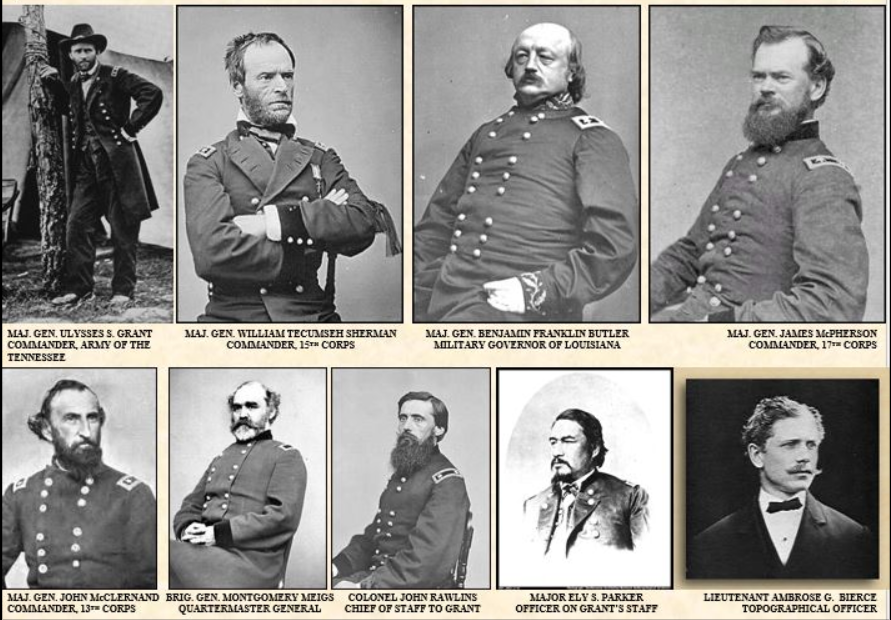
The John Brown depicted is not the infamous Brown who ignited the War Against the States but a former Boston detective who solved a gruesome child murder case which caught the eye of Abe Lincoln, appointing him to U.S. Grants battalion. Brown uncovers treason at the highest levels of the Union Army. He sends for the one person who can help him with the investigation, Cpt. Alphonso Clay. But before Clay could meet with Brown, Brown is assassinated. Now it is up to Cpt. Clay to decipher Brown’s cryptic notes and follow his deductive instincts to solve the murder, unveil the traitors, and ensure the Union’s victory at Vicksburg, a decisive battle of the war.

Clay is a unique character; his lineage a contaminated mesh of human and ‘other-worldly,’ giving him special gifts and talents — super-human eyesight, hearing, speed, and other abilities. With the death of the one person whom he ever loved, Arabella Lot, he puts himself in repeatedly dangerous situations, volunteering for the most horrendous assignments, hoping for death to come… and to be given the chance to kill the one responsible for Arabella’s demise.

After receiving his Juris Doctorate from UCLA, he worked for The Department of Defense and the aerospace industry, specializing in contracts and regulatory issues. Tracing his Californian ancestry all the way back to the 1830s, Martin developed a passion for American history and the mystery genre. With encouragement and support from his beloved wife Sonia, he began writing The Alphonso Clay Mysteries. Sonia passed away on Christmas Eve 2009, following a brave battle against ovarian cancer. He promised her he would finish the books and become a published author. The series includes: Treason on the Mississippi, The Siege of Knoxville, Murder on the March, Murder by Plague, and Assassination at Willard’s. His latest novel, Brother, Can You Spare a Dime? (Amphorae Publishing), picks up with Clay in the late 1920s. Destroyer of Worlds is next in the series. Clay lives on…

Published by TouchPoint Press  Represented by Loiacono Literary Agency
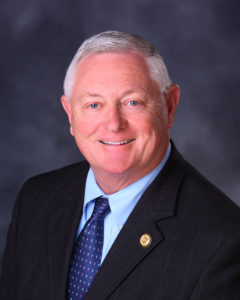
The Small Things by Bud Hearn

The Weakly Post

The Small Things


“For who has despised the day of small things?”          Ruminations of a 6th Century BC Prophet.


**********


It was one morning last July. A cup of coffee and I were on the back porch hoping for inspiration, some spark of creativity for a Weakly Post subject. My brain was as empty as politician’s rhetoric.


The Bible lay closed on the table.  Somebody once said that if you want to know what God has to say to you today (a big assumption, since He’s been pretty mute since Moses), just shut your eyes, open the Bible and put a finger on the page. Whatever verse it falls on is your message for the day. Sorta like cracking a Biblical fortune cookie.


Of course, God has ways and means of speaking, like burning bushes, whales, frogs, locusts, thunder and even dumb asses (uh, that’s Bible-speak for donkeys, and does not necessarily refer to politicians). I’m pretty sure He spoke to me one time after five Varsity chili dogs. But that’s another story.


So I’m no skeptic when it comes to Biblical advice. There’s good stuff in there. But I figure such randomness has terrible odds, about the same as being struck twice by lightning, which is about 1 in 9 million, assuming you survived the first strike. Actually, these are better odds than winning Powerball or Georgia winning against Florida this weekend.


But what the heck. Why not? Still, I couldn’t help thinking how silly the suggestion was. Success would be like walking blind into Publix, groping the shelves for a can of tuna and finding one. It could be dog food.


But I did it anyway. My finger landed on a verse in the writings of Zachariah, one of the Minor Prophets. I kinda felt sorry for Zach, being minor and all, until I read the verse. Notwithstanding the obscurity of his prophesy, he was on to something here: It’s the little things of life that count.


So there, I had it, a theme.  Now all I had to do was fill it with words. I cobbled a few together on the backside of a crumpled bill from the Confiscator of Last Farthings (the IRS) and wrote this poem.


The Small Things


The small things,

incomplete clusters,

Like tiny chips in a stone mosaic,

they identify us.


Ask Jesus.

He notices.


We boast of the Big,

Shroud the small, and

Tuck them inside drawers,

upon shelves of yesterday,

in nooks and crannies stuffed full

of the ignored

the irrelevant

the insignificant.


How long this friendship,

this marriage, this place?

Do I know her? Him? It? Me?


We leave in pieces,

Inches not miles,

Seconds, not hours,

Scattered in bits and pieces

These Trails of ourselves.


Big comes in spurts,

Small is habitual.

The big things fade,

fail to linger long.

The small things abound,

occupy the empty, dusty spaces

of life,

of love,

of joy,

of tears,

of things gained,

of things lost,

remnants mostly forgotten.


The whims of acquisition wasted,

no regrets, money spent, gone,

life’s choices scattered,

some here, some there, yet

the small necessities remain.


The costly and the cheap

co-exist quietly

like strangers in a crowd,

each claiming small spaces to breathe…

the important

the insignificant

the impotent

The ignored,

All co-joined, seeking identity,

craving distinction in the world of chance,

an array of shapes

of use,

or non-use,

part of a jumbled collage of

random collections

meaning what?


A note written, not mailed

Black ink its voice, now muted

its passions past, the memory silent.


I imagine a box

brimming with these small things of life

poured out, scattered

reassembled, these little things

defining the image of her, of him, of it, of me.


Can we see now

what can be known

of it all?


Jesus knows.

Are we beginning to get

a clue?


**********


The Small Things, the seemingly insignificant incidents, are yesterday’s building blocks for today. Can the Small really be the big, and the Big actually nothing more than occasional adjectives in the mosaic of life? Depends on perspective, I guess. But Somebody knows.


Bud Hearn

October 27, 2017

Thomas E. Simmons on Meet the Authors

“Meet the Authors” featuring local author Thomas E. Simmons, author of The Man Called Brown CondorForgotten Heroes of World War II: Personal Accounts of Ordinary Soldiers Land, Sea and AirEscape from ArchangelBy Accident of BirthThe Last Quinn Standing, and Yesterday a War, Tomorrow a War, a Family in Between. “Meet the Authors” interviews 3 local authors each episode and shows on Ocean7 on CableOne 1007, Uverse 7, or antena 7 Sundays at 6 p.m. and Mondays at 7:30 p.m. Other episodes are available on YouTube. Search for “Meet the Authors Ocean7.” https://www.youtube.com/watch?v=GqrEmYnbieI


Two chances to hear or meet Rochelle Wisoff-Fields!

Two chances to hear or meet Rochelle Wisoff-Fields!

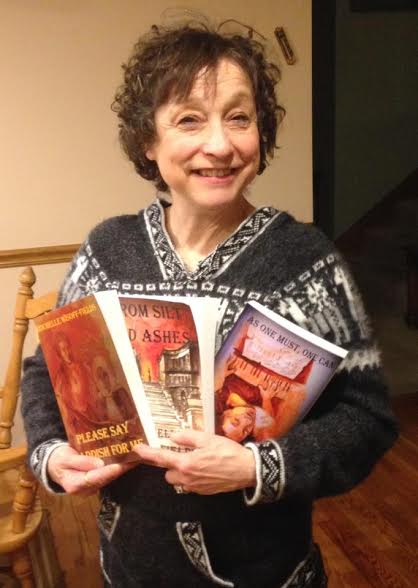
Rochelle Wisoff-Fields will be interviewed this coming Thursday, Oct. 26 at 9:00 PM CDT on The Writers Block. http://latalkradio.com/content/writers-block and then on Friday/Saturday at the Texarkana Arkansas The Gathering of Authors. http://gatheringofauthors.com/index.html Fields is the author of Please Say Kaddish For Me, From Silt and Ashes, and As One Must, One Can.

The Tongue is a Fire by Bud Hearn

The Weakly Post

The Tongue is a Fire


    “The tongue is a fire…and it is set on fire of hell.”


**********


It was a long time ago and far away when the Apostle penned this theorem. He was sitting under a date palm near the Dead Sea discussing women with his tongue-tied camel.


The validity of the theory was confirmed later that day when with a slip of the tongue he mentioned to his wife something about, “That’s woman’s work.”  His tongue ignited a flame that burns in infamy to this day.


The tongue is a torch. It ignites.  Sparks from words fly off and can set on fire the course of nature. The tongue is an unruly evil. It’s impossible to tame.


I learned this lesson the hard way. I was born with a forked tongue. It manipulated facts and fabricated untruths. I was five or six at the time. I had discovered some packets of what looked like candy.  Like a dog, I ate anything. I remember exactly how the events unfolded.


Son, what are you eating?” Mama asked.


Uh, candy grandmama gave me,” I said. The deceit slid off my tongue like greased lightening. I didn’t even have to think about it. There I stood, drooling. Five packs of empty Rolaids wrappers lay scattered about my feet. The severe tongue-lashing and stinging switch-thrashing convinced me that the tongue was not my friend.


Tongues wag uncontrollably. They’re attached in the mouth but lack connectivity to the brain, clearly a flaw in the original human design. No doubt it originated in some mythic fruit tree garden. Sadly, medical science cannot correct the glitch.


Tongues boast great things. This is the main use of it among men. It becomes quite lively after vast infusions of firewater. The context of such wagging tends to be centered on exaggerated achievements concerning money, athletics and embellished, tongue-in-cheek youthful dalliances. Not necessarily in this order, and nothing believable!


Shakespeare made this discovery by accident while nursing a hangover. He passed it on to Polonius who warned Ophelia, “…(when) the blood burns, how prodigal the soul lends the tongue vows.”  The tongue boasts more than it can back up. Ask any politician.


The tongue’s fire begins as a spark in the back of the mouth. It roars forward at warp speed, gathers a host of demons and exits the tongue’s tip with a searing flame…too late for a recall.


My friend Marvin, a renowned deep thinker, forgot to bite his tongue when his wife asked him how her new dress looked. His tongue betrayed him. His knee-jerk response went something like this: “It makes you look fat.”


     “Just kidding,” he added, tongue-in-cheek. His apology was so shallow it was like trying to put out a house fire by spitting on the roof. Marvin now lives alone in Ludowici, thinking about what went wrong.


Last September was the anniversary of Einstein’s profound equation: E = mc2It simply states that a tiny mote of mass can yield enormous energy. In fact, the nuclear bomb that exploded over Nagasaki contained less than an ounce of plutonium. Einstein made this discovery by accident.


One evening he came home, frustrated from thinking.  The equation was eluding him. A stiff nip of rye sharpened his tongue. In his best Yiddish he snapped at his wife, “Velkh iz oyf varmes, eyfele?” Translated, it’s “What’s for dinner, baby.”  E = mc2 came to him at the precise moment when the matzah ball exploded on his forehead.


Others have made such discoveries. I once remember commenting to my wife with a smug, silver tongue that nobody made banana pudding like mama. For some reason banana pudding has not been in our refrigerator since that comment. Such is the power of words.


Is there hope for the taming of the tongue? Nothing yet has been discovered that will mitigate the damage caused by this double-edged sword. I found this out again the hard way only last week.


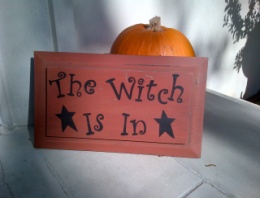
We’re pulling out the Halloween paraphernalia. Among such is a sign board that reads, “The Witch Is In.” I show it to my wife.  We laugh. She leans it against the pumpkin on the front steps. My tongue suggests we should nail it to the door permanently. Only a pitiful, “Oops” escaped my lips. Too little, too late.


**********


Out there in the vibrations of digital arcana the tweeting tongue twitters…and the fires of hell begin to rage.


Bud Hearn

October 20, 2017

2017 Readers Choice Awards! Please vote for BY ACCIDENT OF BIRTH by Thomas E. Simmons!

2017 Readers Choice Awards! Please vote for BY ACCIDENT OF BIRTH by Thomas E. Simmons! www.tckpublishing.com/readers-choice-voting

By Accident of Birth by Thomas E. Simmons https://www.amazon.com/dp/B018R5MM1E/?tag=juicblog-20  is one of the best Historical Fictions I have ever read, and so is the sequel, The Last Quinn Standing. Exemplary writing!

Select above TCK Publishing link, arrow right to Historical Fiction, click on title, vote, and leave a comment. By Accident of Birth is published by TouchPoint Press. Represented by Loiacono Literary Agency.

Foreword Reviews of Don Quixote and Candide Seek Truth, Justice, and El Dorado in the Digital Age 

Foreword Reviews of Don Quixote and Candide Seek Truth, Justice, and El Dorado in the Digital Age 

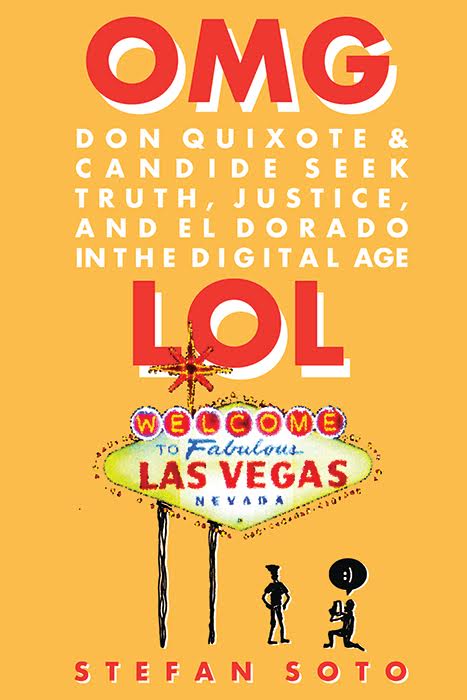
Don Quixote and Candide Seek Truth, Justice, and El Dorado in the Digital Age is fanciful, intelligent entertainment, better sipped than gulped to enjoy the full effect.The picaresque novel gets a fresh spin in Stefan Soto’s time-twisting tale, Don Quixote and Candide Seek Truth, Justice, and El Dorado in the Digital Age.
Candide and Don Quixote, characters in books a hundred years apart, are very much alive when they meet by chance in tavern. Both mourn the fact that their great adventures are behind them, and decide to embark together on a final, bold journey—a search for the truth.
Soon they are on the road, bound by rail and sea for the New World, otherwise known as America. This is, however, no ordinary journey, for it traverses not only distance but also the infinite. Time has no boundaries, cell phones coexist with pirates, and the next text message might be from Sherlock Holmes.
The book is narrated by Candide, whose voice is pitch-perfect for Voltaire’s creation. Always susceptible to female charms, Candide also keeps a blog and is quick to embrace the wonders of technology. Don Quixote is also well drawn as an idealistic and melancholy knight dreaming of great deeds that will never come to pass. It’s a major achievement that these characters’ voices, though from different eras, are simultaneously clever, archaic, and appealing to contemporary ears.
As the journey unfolds, it draws in other familiar characters from the classics, all true to their originals, but all in slightly altered roles. They include Dr. Watson, Holmes’s right-hand man, who now has a syndicated television show; Cyrano de Bergerac as a forlorn railroad conductor; and Tom Sawyer and Huck Finn, who run a not-quite-honest salvage business. The structure of the book is episodic, and as these characters and a host of others are introduced and bid farewell, the pace is swift.
The writing is unfailingly clever, with many rewards for those well-versed in the classics and history—as when Don Quixote explains that he invented anagrams while standing in long lines during the Franco era. Though echoes of Cervantes and Voltaire’s original works are heard, recent reading isn’t necessary; Candide and Don Quixote both adroitly fill in the blanks by recounting their histories at the hands of their respective “biographers.”
Contemporary culture is also in play, as the quest for truth leads the adventurers to contemporary Las Vegas, and brings in the crew of the original Star Trek to shed light on the latest developments in time travel.
The swift pace slows with the introduction of Elizabeth Bennett, held captive by Long John Silver.  Candide is instantly infatuated with the heroine of Pride and Prejudice, and volunteers to undertake her rescue, even though it means reuniting her with her true beloved, Mr. Darcy. This subplot goes on a bit too long and blunts the more interesting plot thread of whether and how Candide and Don Quixote are going to make their ways back to their own time zones.
Don Quixote and Candide Seek Truth, Justice, and El Dorado in the Digital Ageis fanciful, intelligent entertainment, better sipped than gulped to enjoy the full effect.